
When Pain Persists After “Successful” Therapy
You’ve done everything right attended every physical therapy session, followed your exercises, and tried all the recommended treatments. Yet your neck still hurts. You’re frustrated and wondering why the pain hasn’t gone away.
At DMX Miami, serving patients from South Miami, Broward County, and Fort Lauderdale, we see this scenario daily. Many patients complete rehabilitation only to realize their pain returns as soon as they resume normal activity.
The reason often isn’t muscle weakness or bad posture it’s ligament laxity, a hidden instability that traditional therapy can’t fix and standard imaging can’t detect.
This is where Digital Motion X-Ray (DMX) becomes essential because it shows what other tests miss.
What Is Ligament Laxity?
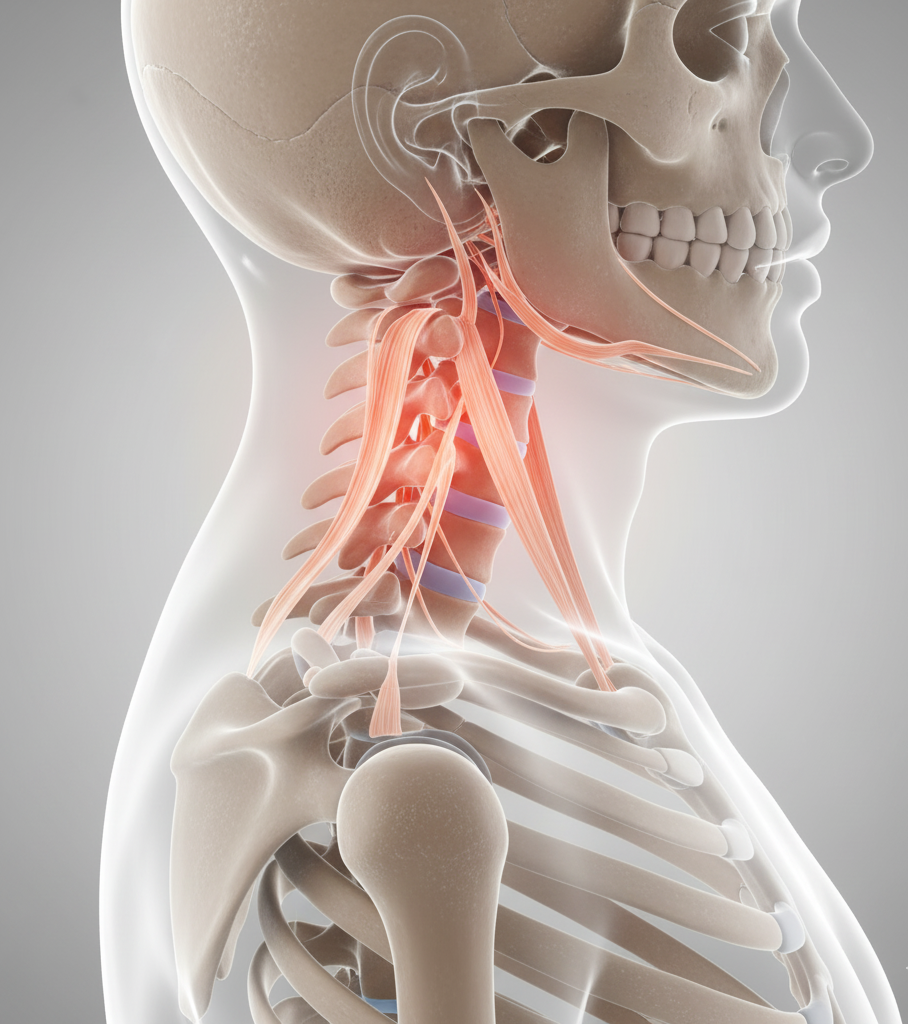
Ligament laxity occurs when the ligaments the strong connective tissues that stabilize the bones of your spine become overstretched or partially torn. Instead of holding your vertebrae in perfect alignment, they allow excessive movement.
Over time, this instability creates abnormal motion between the bones, irritating nerves and muscles and causing persistent pain.
Symptoms of ligament laxity may include:
- Chronic neck or back pain.
- Headaches or dizziness.
- Clicking or popping sensations.
- Fatigue and muscle tension.
- Numbness or tingling in the arms.
Even the best physical therapy can’t correct this if the root cause mechanical instability remains undiagnosed.
Why Standard Imaging Doesn’t Show the Problem
Most imaging studies, like MRI or CT scans, are taken while you’re lying completely still. That’s helpful for seeing discs or fractures, but ligament damage only appears when the spine moves.
This means your MRI can look normal, yet your ligaments may be unable to stabilize your neck when you turn, bend, or lift.
That’s why so many patients leave therapy confused their doctors tell them the imaging is fine, but their symptoms say otherwise. Digital Motion X-Ray changes that.
How Digital Motion X-Ray Finds the Hidden Instability
At DMX Miami, we use advanced fluoroscopic imaging to record your spine in real time while it moves. This creates a dynamic video that reveals exactly how each vertebra behaves during motion.
With DMX, we can:
- Identify ligament laxity or partial tears.
- Detect abnormal vertebral shifting or translation.
- Correlate movement abnormalities with specific pain patterns.
- Document instability that traditional scans miss.
Patients are often relieved to finally see visual proof of what they’ve been feeling all along their pain is real, and it has a cause.
Why Therapy Alone Doesn’t Solve Ligament Damage
Physical therapy strengthens muscles, but it doesn’t repair ligaments. Muscles can compensate for instability temporarily, but they can’t hold the spine in proper alignment when the ligaments are weak.
This often explains why patients improve for a while and then regress. The body is compensating, not correcting.
DMX provides the missing diagnostic insight that guides clinicians toward treatments that actually stabilize the spine rather than just manage symptoms.
The Consequences of Untreated Ligament Laxity
Ignoring ligament instability can lead to progressive degeneration and worsening symptoms. Over time, it can cause:
- Accelerated disc wear and arthritis.
- Chronic muscle fatigue.
- Postural imbalance.
- Nerve compression and neuropathy.
- Persistent pain even after “successful” rehabilitation.
Identifying the instability early with Digital Motion X-Ray can prevent these long-term issues and direct you toward true corrective care.
Why Patients from Florida and Beyond Choose DMX Miami
Patients from South Miami, Fort Lauderdale, and across Florida, as well as from Colombia, Mexico, Argentina, Chile, and the Caribbean, travel to DMX Miami for answers they couldn’t find elsewhere.
They choose us because we offer:
- Motion-based imaging that captures real spinal movement.
- Expert interpretation of ligament instability.
- Detailed reports for physicians, chiropractors, and attorneys.
- Bilingual care (English and Spanish) for all patients.
Our goal is to uncover the true cause of your pain not just treat what shows on static scans.
When You’re Ready for Real Answers
If you’ve completed therapy but still feel pain, stiffness, or instability, don’t assume it’s “in your head.” Your ligaments may be the missing link.
Digital Motion X-Ray can detect the micro-instabilities that cause chronic pain and guide you toward real, lasting relief.
Learn more: Treatment
Schedule your appointment today: Appointments
Call 305-275-7475 or book your appointment online

Dr. Rodolfo Alfonso, D.C.
Dr. Mark N. Berry, D.C.
Sunset Chiropractic and Wellness
8585 Sunset Dr. STE 102
Miami, Florida 33143