How Digital Motion X-Ray Documents Ligament Injuries Others Overlook
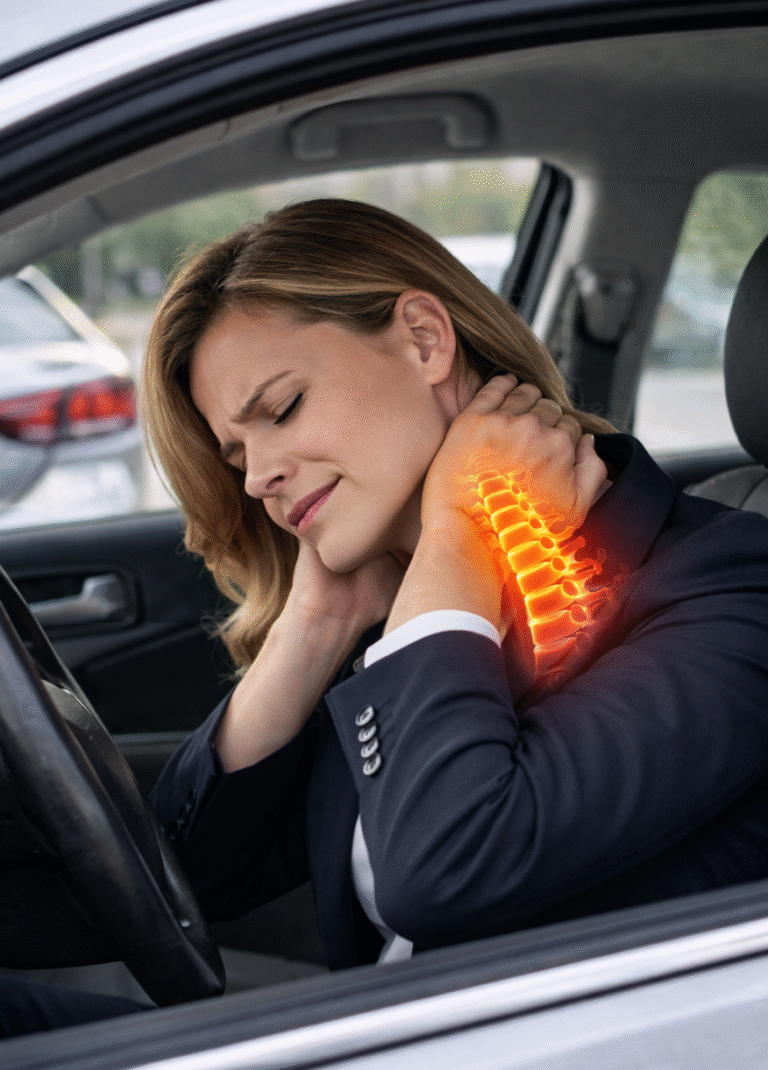
Many people hear the same line from insurance companies after a rear-end or low-speed
collision:
“There wasn’t much damage to the car, so you couldn’t have been seriously
injured.”
Yet they still deal with:
● Neck pain and stiffness.
● Headaches.
● Mid-back or low back pain.
● Dizziness or fatigue.
● Functional limits in work and daily life.
At DMX Miami, we see patients from Miami, Fort Lauderdale, Miami-Dade, Broward, the
Florida Keys, and from across Florida, the USA, Central and South America (Colombia,
Chile, Argentina, Mexico) and the Caribbean, whose bodies did not “match” the minor-looking
damage on the bumper.
Why Low-Speed Doesn’t Always Mean Low Risk
Even at lower speeds:
● The vehicle structure can absorb and distribute force in unpredictable ways.
● The head and neck can accelerate and decelerate rapidly, especially if unprepared.
● The body inside the vehicle may still experience high acceleration forces, even if the
car looks okay.
Your ligaments, muscles, and discs do not know what the repair bill was they only know the
forces they had to absorb.
Common Injuries in “Minimal Damage” Collisions

Low-speed rear-end or side impacts can lead to:
● Cervical ligament injuries and whiplash.
● Thoracic and lumbar sprain/strain.
● Exacerbation of pre-existing degeneration.
● Subtle instability that shows up more during daily activity than in the ER.
Symptoms may appear immediately or gradually over hours or days.
Why Static Imaging Often Looks “Normal”
Emergency room imaging is focused on:
● Ruling out fractures.
● Identifying major dislocations or acute trauma.
Standard X-rays, CT, and even MRI can:
● Show little or no acute injury.
● Emphasize “mild degenerative changes” or “age-appropriate findings”.
● Miss ligamentous instability that appears only when the spine is in motion.
That’s exactly what Digital Motion X-Ray is designed to evaluate.
How Digital Motion X-Ray Helps in Low-Speed Crash Cases
At DMX Miami, Digital Motion X-Ray:
● Records real-time motion of the spine (cervical, thoracic, or lumbar) during controlled
movements.
● Measures abnormal translation and angulation between vertebrae.
● Documents ligamentous instability that often occurs in whiplash injuries..
● Provides objective, visual evidence that correlates with your symptoms.
This is especially useful when static imaging and “minimal vehicle damage” are used to
downplay your injuries.
How DMX Supports Providers and Attorneys
DMX findings can:
● Guide chiropractors and therapists in designing stability-focused care.
● Help pain and regenerative specialists decide where to target treatment.
● Provide attorneys with objective data to support claims of real spinal injury.
● Offer insurers a clearer picture of how the crash affected your spine in motion.
At DMX Miami, we stay in our lane as imaging providersb ut our studies are frequently used in
personal injury and med-legal settings.
International and Out-of-Town Patients Injured in South Florida
People injured in “minor” crashes during vacations or work trips in Miami, South Florida, or the
Keys often:
● Return home to other states or countries.
● Later realize their symptoms are not going away.
● Come back to Miami for higher-level imaging like DMX.
We provide reports that can be shared with your home providers and legal team, in both
English and Spanish.
Your Pain Isn’t Determined by Your Bumper
Minimal vehicle damage does not automatically mean minimal injury. Your spine’s reaction to
the forces matters far more than the repair estimate.
Learn more: Treatment
Schedule your appointment today: Appointments
Call 305-275-7475 or book your appointment online

Dr. Rodolfo Alfonso, D.C.
Dr. Mark N. Berry, D.C.
Sunset Chiropractic and Wellness
8585 Sunset Dr. STE 102
Miami, Florida 33143