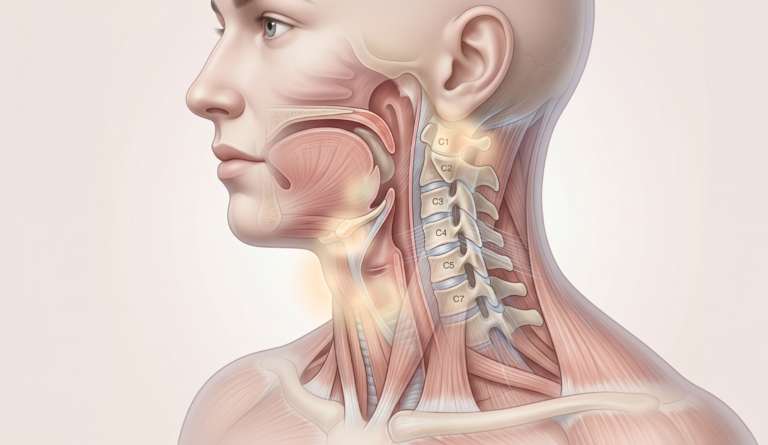
Some patients notice throat tightness or pain with swallowing alongside neck pain after injury. While many causes are unrelated to the spine, cervical muscle guarding and upper-neck mechanics can contribute to throat discomfort patterns especially when symptoms are motion-triggered. DMX can evaluate cervical motion behavior in complex cases.
- Throat discomfort can overlap with neck guarding after trauma.
- Motion-triggered symptoms may point to mechanics involvement.
- DMX provides motion data to guide stabilization-focused planning.
Last updated: April 14, 2026
Reviewed by: DMX Miami clinical team
Some symptoms after a collision feel odd and hard to explain:
- throat tightness.
- discomfort when swallowing.
- a “lump” sensation plus neck pain.
- symptoms that worsen when you turn or look up/down.
At DMX Miami, patients from Miami, Fort Lauderdale, Miami-Dade, Broward, the Florida Keys, and visitors from the USA, Colombia, Chile, Argentina, Mexico, and the Caribbean sometimes report this overlap after whiplash.
Important: throat symptoms can have many causes. The goal is not to assume it’s “the neck,” but to consider mechanics when the pattern is clearly motion-dependent.
How the Neck Can Contribute (In Some Cases)
Protective muscle guarding
After trauma, the front and side neck muscles can tighten to stabilize joints, which can contribute to throat tightness sensations.
Upper cervical mechanics
Irritation and motion sensitivity in upper cervical segments can produce unusual referred sensations.
Posture load
Forward head posture can increase tension in anterior neck structures and amplify symptoms.
When Throat Symptoms Should Be Evaluated Medically First

Seek prompt medical evaluation if you have:
- true difficulty swallowing foods/liquids.
- progressive symptoms.
- fever, infection signs.
- shortness of breath or chest pain.
- unexplained weight loss.
Why Static Imaging Might Not Explain Motion-Triggered Patterns
If symptoms fluctuate with head motion, the issue may involve mechanics that aren’t visible on a static MRI.
How Digital Motion X-Ray Helps
DMX evaluates cervical motion during guided movement and can document:
- translation/angulation patterns.
- asymmetry during rotation and flexion/extension.
- hinge segments that correlate with motion-triggered symptoms.
How DMX Can Change the Care Plan
Internal link prompts:
- Link “Digital Motion X-Ray in Miami” to your main DMX page.
- Link “cervical instability” to a supporting DMX blog.
If abnormal motion is found, providers may:
- prioritize stabilization and controlled motion.
- modify manual care techniques.
- build a posture plan that reduces guarding.
- coordinate with other clinicians if multiple systems are involved.
FAQs
Can neck problems cause throat tightness?
In some cases, cervical muscle guarding and posture strain can contribute to throat discomfort sensations.
Should throat symptoms be checked medically?
Yes especially if swallowing is difficult or symptoms are progressive. Don’t assume it’s mechanical.
What does DMX add?
DMX evaluates real-time cervical motion and can document instability patterns linked to motion-triggered symptoms.
Does DMX diagnose swallowing disorders?
No. DMX evaluates spine motion; swallowing evaluation is a different medical workup.
References
- Cleveland Clinic: Swallowing difficulty (dysphagia) education.
- NCBI/PubMed: Whiplash and cervical muscle/guarding concepts; dynamic imaging principles.
Learn more: Treatment
Schedule your appointment today:Appointments
Call 305-275-7475 orbook your appointment online

Dr. Rodolfo Alfonso, D.C.
Dr. Mark N. Berry, D.C.
Sunset Chiropractic and Wellness
8585 Sunset Dr. STE 102
Miami, Florida 33143