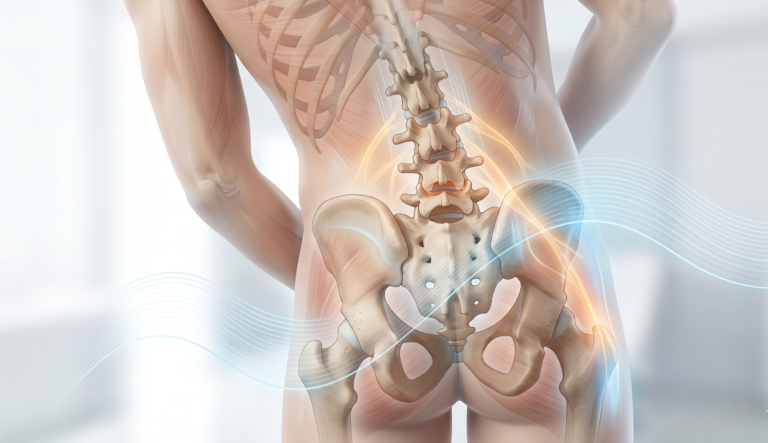
Some “hip pain” is actually driven by lumbar mechanics, especially when symptoms change with bending, turning, or standing transitions. DMX can evaluate lumbar motion behavior in real time to identify hinge patterns or instability that may be contributing.
- Hip-region pain can be compensation from lumbar motion dysfunction.
- MRI is static; DMX evaluates motion (translation + angulation).
- Findings can guide stabilization-first rehab and better exercise selection.
Last updated: April 14, 2026
Reviewed by: DMX Miami clinical team
Many patients are told they have a hip problem, but they notice something important:
- pain changes when they bend or rotate.
- pain spikes when standing up after sitting.
- pain improves when sitting, worsens when standing.
- symptoms feel like beltline/buttock more than true “hip joint” pain.
At DMX Miami, we see this pattern in patients from Miami, Fort Lauderdale, Miami-Dade, Broward, the Florida Keys, and visitors from the USA, Colombia, Chile, Argentina, Mexico, and the Caribbean.
Why Lumbar Mechanics Can Create Hip-Region Pain
Lumbar segments can refer pain into the hip/buttock
Mechanical irritation can present as “hip pain,” especially near the beltline.
A hinge segment overloads neighboring tissues
If one lumbar level moves excessively, the pelvis and hip stabilizers compensate, creating persistent pain.
Trauma and lifting injuries change motion control
Accidents and lifting episodes can alter load sharing, leading to recurring hip-region symptoms.
Why Static Imaging May Not Explain It
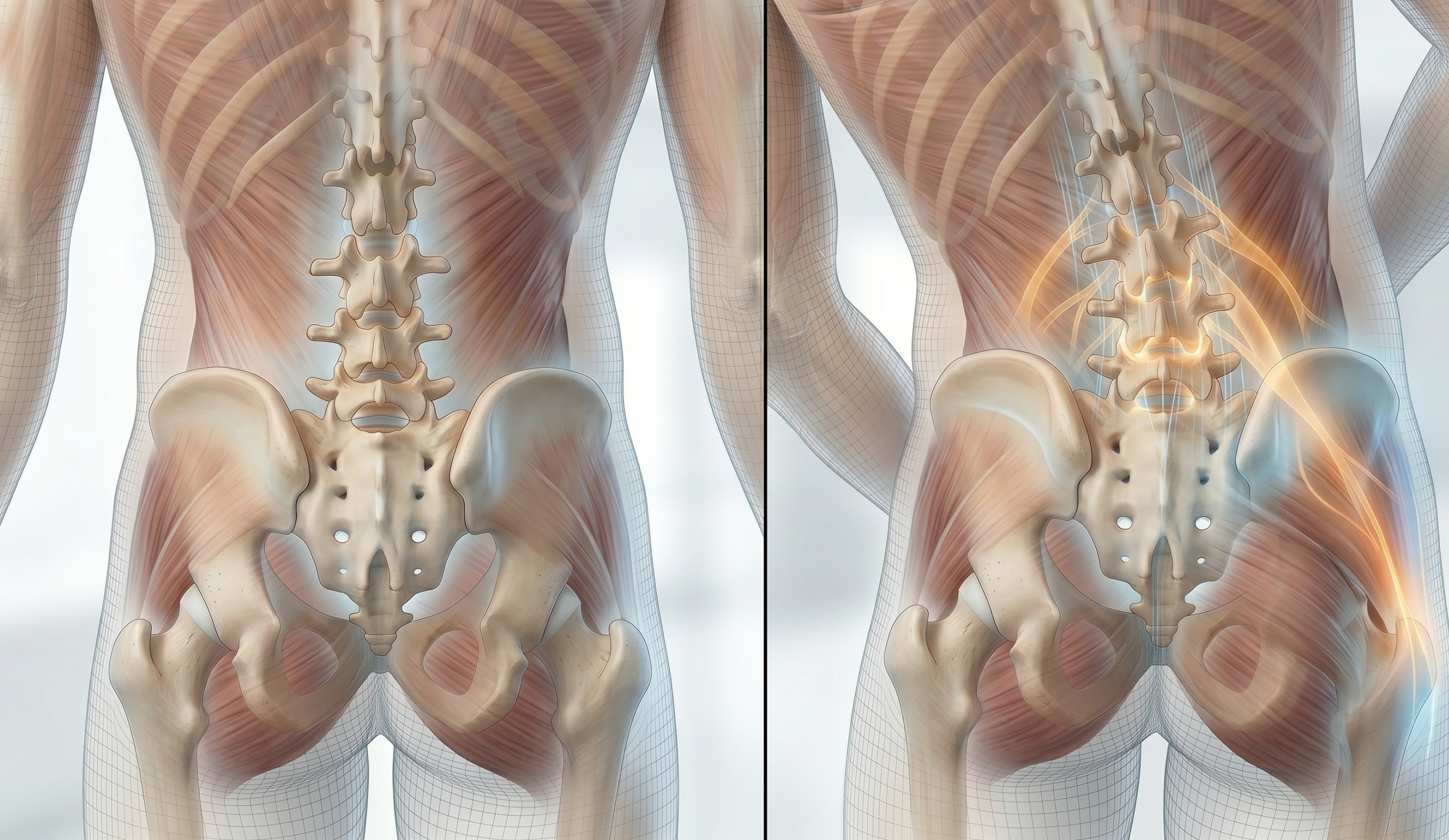
A lumbar MRI is typically done lying down. If symptoms show up during standing transitions and movement arcs, the imaging may not capture the full mechanical story.
How Digital Motion X-Ray Helps
DMX evaluates lumbar motion behavior and can document:
- abnormal translation/angulation.
- hinge patterns.
- uneven motion sequencing during guided movement.
How DMX Can Change the Plan
With motion clarity, providers can:
- stabilize the true driver segment.
- refine hip/core programming.
- avoid stretches that worsen hinge mechanics.
- reduce trial-and-error in persistent hip-region cases.
FAQs
Can lumbar problems feel like hip pain?
Yes. Lumbar mechanics can refer pain into the hip/buttock region and mimic hip issues.
Why does bending or standing change my hip pain?
That pattern suggests mechanics and load-sharing are involved.
What does DMX show for this issue?
DMX evaluates lumbar motion and can document translation/angulation and hinge patterns.
Does DMX replace hip imaging?
No. It complements other imaging when lumbar mechanics are suspected contributors.
References
- AAOS OrthoInfo: Hip pain and low back overlap education.
- NCBI/PubMed: Lumbar instability and motion-sequencing biomechanics
Learn more: Treatment
Schedule your appointment today:Appointments
Call 305-275-7475 orbook your appointment online

Dr. Rodolfo Alfonso, D.C.
Dr. Mark N. Berry, D.C.
Sunset Chiropractic and Wellness
8585 Sunset Dr. STE 102
Miami, Florida 33143