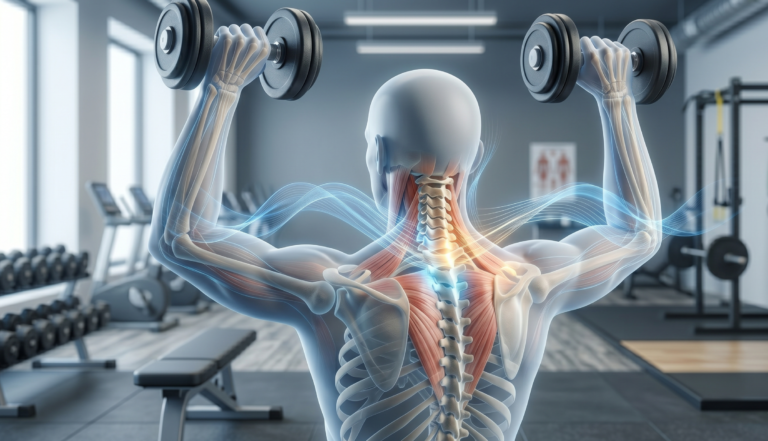
Some people feel okay day-to-day but flare during workouts because certain lifts involve extension, rotation, and bracing that stress motion-sensitive cervical segments. DMX can evaluate cervical motion behavior to help guide safer exercise selection and progression.
- Workouts combine posture load + bracing + motion arcs that trigger symptoms.
- Static imaging can miss motion-dependent instability patterns.
- DMX findings can guide stabilization-first rehab and safer programming.
Last updated: April 14, 2026.
Reviewed by: DMX Miami clinical team.
A common pattern is:
- “My neck is okay… until the gym.”
- “Overhead work triggers headaches.”
- “Rows or presses flare dizziness.”
- “I feel tight and unstable after lifting.”
At DMX Miami, we see this in patients from Miami, Fort Lauderdale, Miami-Dade, Broward, the Florida Keys, and visitors from the USA, Colombia, Chile, Argentina, Mexico, and the Caribbean, especially after prior whiplash or sports impacts.
Why Gym Movements Trigger Neck Symptoms
Extension and bracing increase joint load
Pressing, overhead work, and bracing can increase stress on posterior cervical joints.
Rotation is often hidden
Even when you think you’re training “straight,” many lifts include subtle rotation and asymmetry.
Fatigue reveals instability
When stabilizing muscles fatigue, symptoms rise headaches, heaviness, and neck pain.
Why MRI Can Look Mild
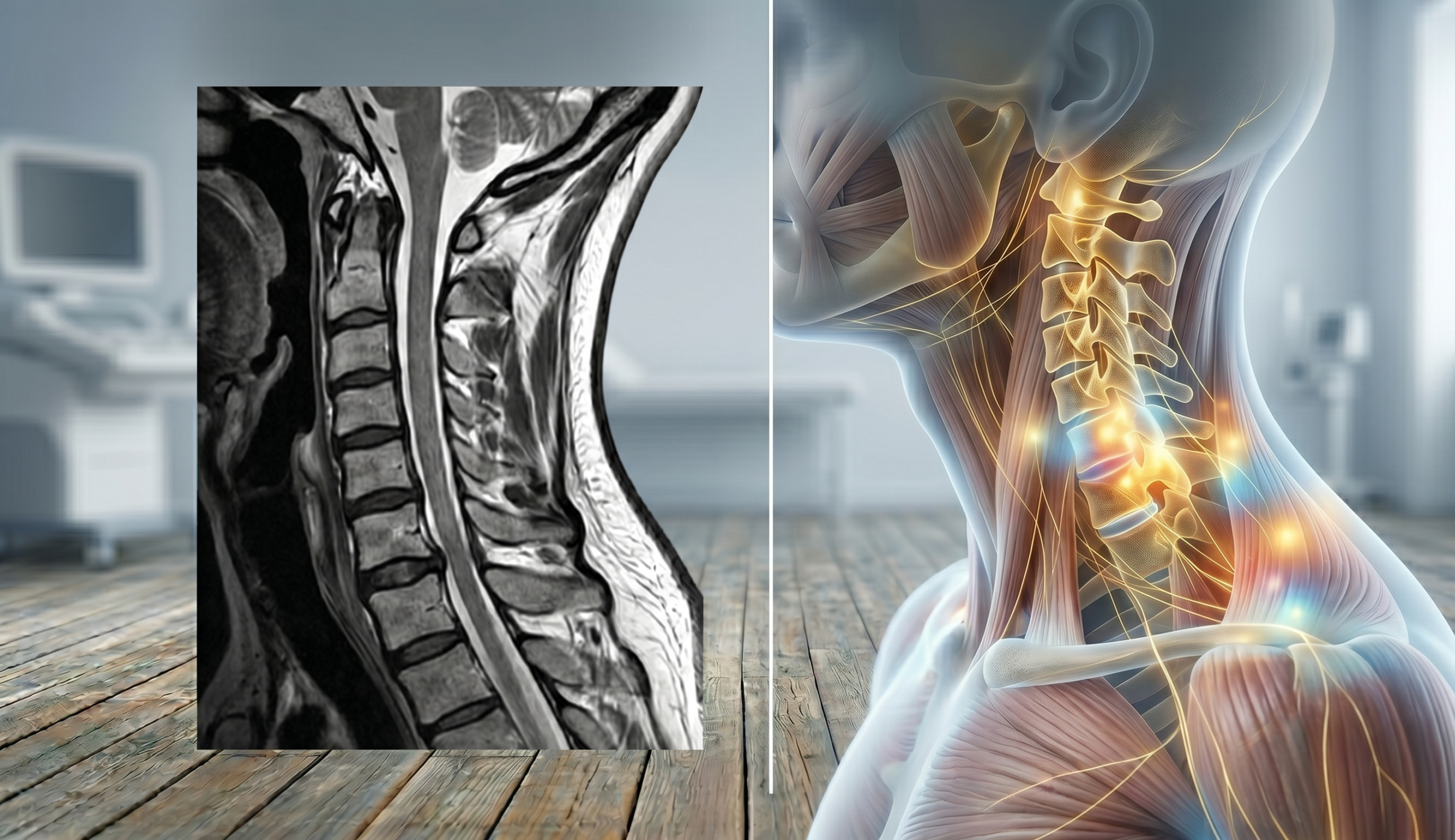
MRI is static. If symptoms show up during dynamic movement and fatigue, the scan may not capture the motion behavior that’s actually provoking symptoms.
How Digital Motion X-Ray Helps
DMX evaluates cervical motion during guided movement and can document:
- translation/angulation behavior.
- hinge patterns.
- asymmetry during movement arcs.
How DMX Can Change Gym Programming
Providers can use findings to:
- choose stabilization-first training strategies.
- avoid feeding hinge patterns.
- progress overhead/loaded movements more safely.
- create milestones tied to tolerance, not just time.
FAQs
Can lifting weights worsen cervical instability?
It can if movement arcs and bracing stress unstable segments.
Why do workouts trigger headaches?
Load, posture, and motion sensitivity can drive cervicogenic headache patterns.
What does DMX add?
DMX documents real-time motion patterns that correlate with symptom triggers.
Should I stop exercising?
Not necessarily. The goal is safer exercise selection and progression based on mechanics.
References
- NCBI/PubMed: Cervicogenic headache and posture/load concepts.
- Cleveland Clinic: Neck pain education and symptom patterns.
Learn more: Treatment
Schedule your appointment today:Appointments
Call 305-275-7475 orbook your appointment online

Dr. Rodolfo Alfonso, D.C.
Dr. Mark N. Berry, D.C.
Sunset Chiropractic and Wellness
8585 Sunset Dr. STE 102
Miami, Florida 33143