Why Vertigo and Balance Problems Are Often Misdiagnosed
Vertigo and balance issues are frightening symptoms that affect thousands of people in Miami, Florida, and millions worldwide. Patients describe the room spinning, sudden dizziness, or feeling as though they might fall without warning. In Central and South America, including Colombia, Argentina, Mexico, and Chile, these symptoms are just as common, but the true cause is often overlooked.
While ear conditions and inner ear disorders are often blamed, many patients with vertigo and balance problems actually suffer from cervical ligament instability. Unfortunately, this root cause is frequently missed because standard imaging tools fail to reveal the ligament damage.
The Role of Cervical Ligaments in Balance
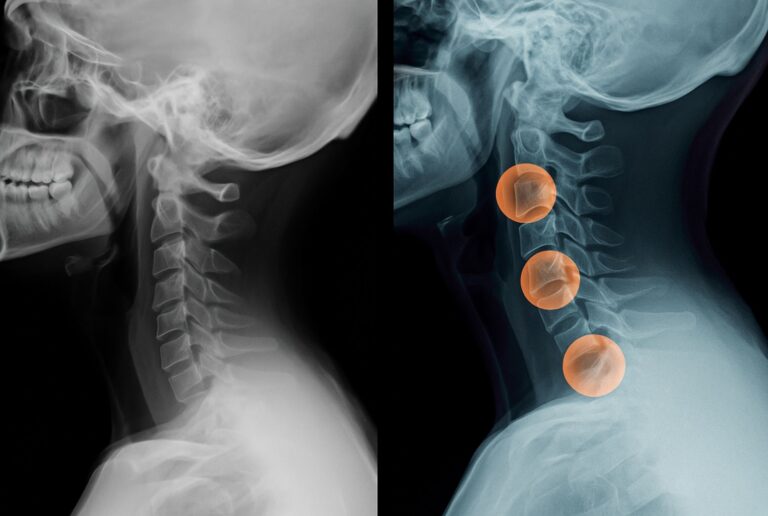
The cervical spine is stabilized by delicate ligaments that guide proper vertebral motion and protect nerves and arteries. When these ligaments are stretched, torn, or weakened often from whiplash injuries, sports trauma, poor posture, or degenerative changes the vertebrae move abnormally.
This instability can affect balance in two critical ways:
- Neurological Interference: Ligament laxity irritates or compresses nerves that control balance and spatial awareness.
- Vascular Disturbances: Unstable vertebrae can disturb blood flow to the brain, contributing to dizziness, vertigo, and visual disturbances.
When ligaments no longer provide stability, patients may experience symptoms every time they move their head or neck.
Why Standard Imaging Misses Ligament Instability
MRI and CT scans are excellent tools for detecting fractures, tumors, or disc problems, but they are static imaging studies. They capture the neck while it is perfectly still. Ligament damage, however, is a movement-based problem. Abnormal gapping, shifting, or sliding of vertebrae only becomes visible when the neck is in motion.
This is why so many patients with vertigo are told their imaging looks “normal” despite ongoing suffering. Without the right test, the ligament instability remains invisible.

How Digital Motion X-Ray Reveals the Real Cause
Digital Motion X-Ray (DMX) is a breakthrough imaging technology that records the cervical spine in motion. By asking the patient to move through flexion, extension, rotation, and side-bending, DMX captures real-time X-ray video at 30 frames per second.
This dynamic imaging allows doctors to see:
- Ligament laxity and excessive vertebral motion
- Hidden instability contributing to vertigo
- Abnormal sliding or gapping between vertebrae
- The direct link between neck movement and dizziness symptoms
For patients, DMX is often the turning point where they finally see objective evidence of the problem that has been ignored for years.
Symptoms That Suggest Cervical Ligament Instability
If you experience vertigo or balance issues along with any of these symptoms, cervical ligament instability may be the cause:
- Chronic headaches or migraines
- Neck stiffness or pain
- Dizziness when turning the head
- Ringing in the ears (tinnitus)
- Vision problems or eye strain
- Unexplained fatigue and concentration difficulties
When multiple symptoms overlap, DMX provides a clear diagnostic path to confirm the role of ligament instability.
Why Patients Choose Digital Motion X-Ray in Miami
Our Miami clinic specializes in identifying ligament instability with DMX. Patients travel not only from across Florida and the United States but also from Colombia, Argentina, Mexico, Chile, and other Central and South American countries.
Miami is a medical hub with easy access for international patients, and our bilingual staff (English and Spanish) ensures that every patient receives clear explanations and support throughout the diagnostic process.
The Benefits of an Accurate Diagnosis
When ligament instability is confirmed with DMX, treatment plans can finally be tailored to the root cause. Instead of endless prescriptions or balance medications, patients can pursue:
- Targeted rehabilitation to strengthen supporting muscles
- Regenerative medicine to repair ligament damage
- Postural correction therapies
- Specialized chiropractic or physical care designed to restore stability
With the right diagnosis, patients move from frustration to relief, often experiencing dramatic improvement once the instability is addressed.
Taking the Next Step
If you are struggling with vertigo, dizziness, or unexplained balance problems and standard imaging has given you no answers, it’s time to consider Digital Motion X-Ray in Miami.
The test is quick, accurate, and provides the missing insight into ligament instability that could be the true cause of your condition.
Learn more: Treatment
Schedule your appointment today: Appointments
Don’t settle for uncertainty find out if hidden ligament damage is behind your symptoms.
Call 305-275-7475 or book your appointment online

Dr. Rodolfo Alfonso, D.C.
Dr. Mark N. Berry, D.C.
Sunset Chiropractic and Wellness
8585 Sunset Dr. STE 102
Miami, Florida 33143
305-275-7475