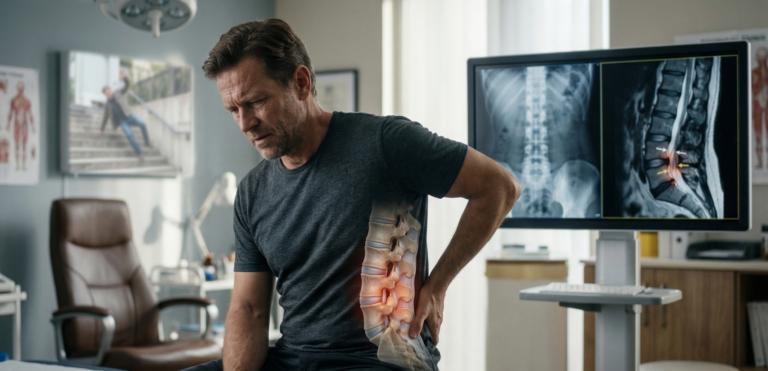
How DMX Helps Evaluate Ligament Injury and Hidden Instability
Falls happen everywhere, but in fast, active environments like Miami, Fort Lauderdale, and the Florida Keys, people often fall on:
- Wet tile.
- Pool decks.
- Stairs.
- Uneven sidewalks.
- Boats and docks.
After the fall, standard care focuses on ruling out fractures. Many patients are told:
- “No fractures. You’re okay.”
- “Just rest; it should improve.”
But weeks later, they still have:
- Neck pain or low back pain.
- Pain when turning or bending.
- A feeling of instability or “guarding.”
- Headaches or dizziness (if the neck was involved).
That’s when patients start asking: What was missed?
Why Falls Can Injure Ligaments Without Breaking Bones
Ligaments stabilize vertebrae during motion. A fall can:
- Force the spine into a sudden bend or twist.
- Stretch or partially tear ligaments.
- Create subtle instability that shows up only when moving.
Even if bones are intact, ligament injury can create lasting pain because muscles must constantly “brace” the area.
Why Standard Imaging May Not Show the Real Problem
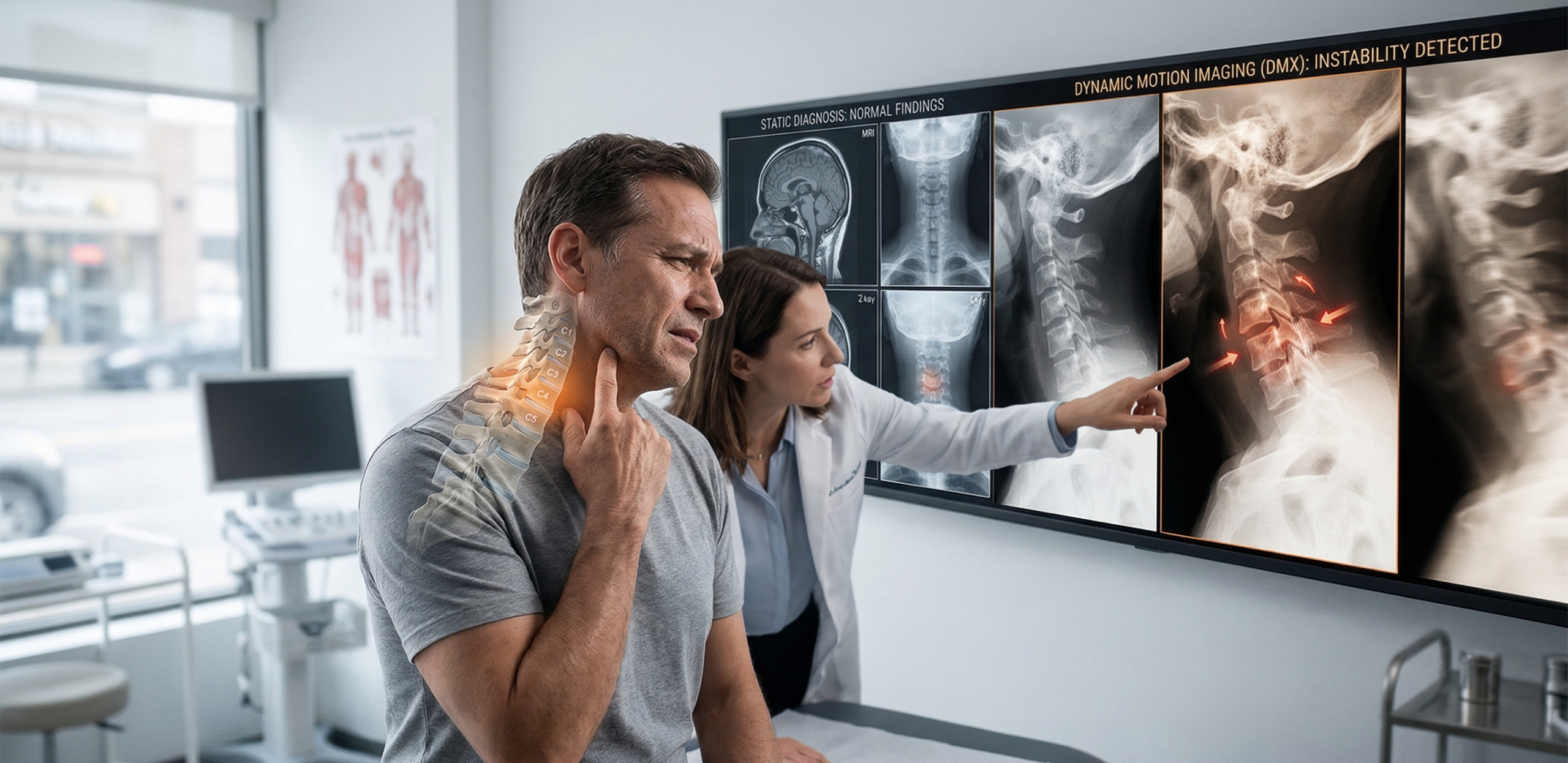
Regular X-rays and MRI can be essential, but they often:
- Capture the spine in still positions.
- Miss instability that appears during movement.
- Underestimate injury when symptoms are motion-driven.
If your pain is tied to specific movements (turning, bending, looking up/down), motion-based imaging can add information.
How Digital Motion X-Ray Helps After Falls
DMX records spinal motion during guided movement to evaluate:
- Abnormal translation and angulation.
- Segmental instability patterns.
- Motion irregularities that correlate with symptom triggers.
This can be relevant in cervical, thoracic, or lumbar regions depending on where your symptoms are.
Why This Matters for Treatment
If instability is present, the plan often needs to emphasize:
- Stabilization and controlled motion.
- Safer manual techniques.
- Gradual movement progression.
- Targeted care to the specific levels involved.
That’s very different than simply stretching tight muscles or waiting for time to fix everything.
When to Ask About DMX After a Fall
Consider discussing DMX if:
- Pain persists beyond the expected healing window.
- Symptoms are strongly movement-dependent.
- You feel catching, shifting, or “heavy” fatigue.
- Standard imaging hasn’t explained ongoing limitations.
Learn more: Treatment
Schedule your appointment today:Appointments
Call 305-275-7475 orbook your appointment online

Dr. Rodolfo Alfonso, D.C.
Dr. Mark N. Berry, D.C.
Sunset Chiropractic and Wellness
8585 Sunset Dr. STE 102
Miami, Florida 33143