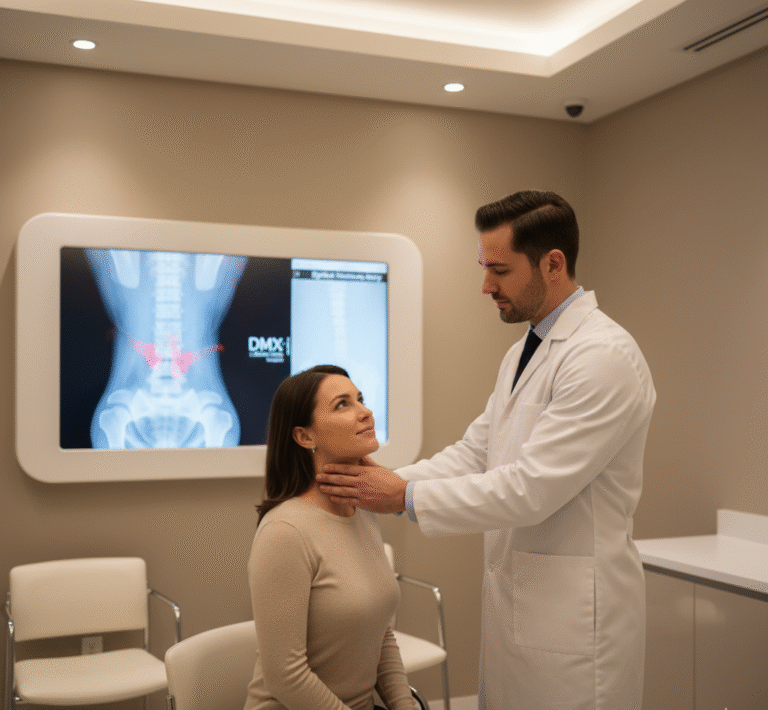
The Aftermath of an Accident: When Pain Doesn’t Add Up
Car accidents even at low speeds can have life-changing effects. Many people walk away thinking they’re fine, only to develop pain, headaches, or stiffness days or weeks later.
At DMX Miami, serving South Miami, Miami-Dade County, Broward County, and Fort Lauderdale, we see countless patients who have suffered from undiagnosed ligament injuries long after their accident.
They’ve done everything right visited the ER, gotten X-rays, maybe even an MRI yet they’re still in pain. The reason? Standard imaging can’t show the ligament instability that happens when the spine moves. That’s where Digital Motion X-Ray (DMX) changes everything.
Why Traditional Imaging Often Misses Post-Accident Injuries
Standard X-rays and MRIs are taken while the body is completely still. But the cervical spine particularly in the neck depends on movement for stability and function. When ligaments are stretched or torn during trauma, the damage doesn’t show up in static images.
This leads to frustration and confusion for patients told that “everything looks normal,” even though they’re dealing with:
- Chronic neck or back pain.
- Headaches or dizziness.
- Shoulder, jaw, or arm discomfort.
- Muscle fatigue and stiffness.
- Tingling or burning sensations.
DMX bridges this gap by capturing how the spine behaves in real-time motion, revealing the mechanical problems that static scans miss.
Understanding Ligament Instability After Trauma
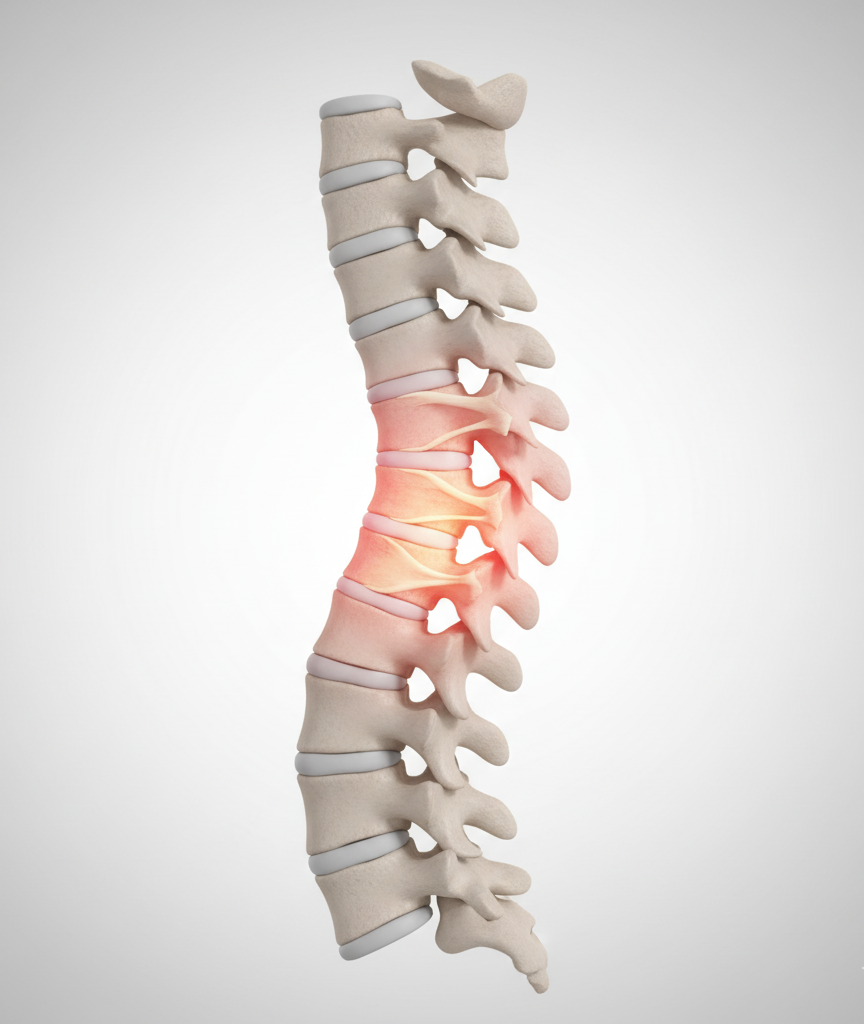
Ligaments are the spine’s stabilizing structures. They hold the vertebrae in place, prevent excessive motion, and protect the spinal cord.
During a car crash or fall, the rapid acceleration and deceleration can overstretch these ligaments, especially in the upper cervical spine (C0–C2) and lower cervical spine (C4–C7). Once damaged, these ligaments can no longer keep the vertebrae aligned, leading to instability.
That instability creates constant micro-movements, irritating nerves and soft tissues and that’s what causes ongoing pain, muscle tension, and neurological symptoms.
Only Digital Motion X-Ray can reveal these subtle shifts in movement and help clinicians identify which ligaments are failing to stabilize properly.
How Digital Motion X-Ray Works
At DMX Miami, we use advanced fluoroscopic imaging to record the spine while you move bending, rotating, and extending your neck in controlled sequences.
This produces a high-definition video that shows exactly how each vertebra moves in real time. Our doctors can then:
- Detect ligament laxity or instability.
- Visualize abnormal joint motion or gapping.
- Identify nerve impingement caused by spinal shifting.
- Correlate findings directly with your pain pattern.
It’s the closest thing to watching your spine “in action” and it’s often the missing piece that explains chronic post-accident pain.
Common Hidden Injuries Found by DMX
Even after a “minor” accident, DMX imaging often reveals damage that traditional X-rays miss, including:
- Alar or transverse ligament injury in the upper cervical spine.
- Capsular ligament laxity leading to joint instability.
- Postural misalignment such as forward head posture.
- Abnormal movement patterns causing nerve irritation.
Patients frequently describe relief just from understanding that there’s a real, visible cause for their symptoms not just muscle soreness or “stress.”
Why Early Detection Matters
Undiagnosed ligament injuries don’t just cause pain they can lead to long-term degeneration and even chronic neurological issues.
If instability is left untreated, it can:
- Accelerate disc degeneration and arthritis.
- Cause spinal misalignment and posture changes.
- Lead to recurring pain and reduced range of motion.
- Increase the risk of future injuries.
Early detection with Digital Motion X-Ray gives doctors the information they need to create a treatment plan that stabilizes the spine and prevents further damage.
Who Should Consider DMX After an Accident
You should consider DMX imaging if you’ve experienced:
- A car accident or whiplash injury.
- A fall, sports trauma, or head impact.
- Chronic pain or stiffness after normal imaging.
- Numbness, dizziness, or headaches after an accident.
- Clicking, popping, or grinding when turning your head.
Patients from Florida, the U.S., and countries such as Colombia, Mexico, Argentina, and the Caribbean travel to DMX Miami for this advanced diagnostic technology. Our bilingual team (English and Spanish) ensures every patient gets the answers they need.
Why Patients Choose DMX Miami
At DMX Miami, we combine cutting-edge technology with compassionate, expert care. Our patients trust us because we:
- Detect injuries other scans can’t.
- Provide detailed diagnostic reports for doctors or attorneys.
- Offer a comfortable, professional environment.
- Provide bilingual service for international patients.
We’ve helped countless patients finally uncover the cause of their lingering pain often years after their injury.
Don’t Let Hidden Injuries Go Undetected
If you’ve been in an accident and still feel pain, don’t settle for “normal” imaging results. The problem may be hidden in your ligaments and Digital Motion X-Ray can reveal it.
Discover what’s really behind your symptoms and take the first step toward healing.
Learn more: Treatment
Schedule your appointment today: Appointments
Call 305-275-7475 or book your appointment online

Dr. Rodolfo Alfonso, D.C.
Dr. Mark N. Berry, D.C.
Sunset Chiropractic and Wellness
8585 Sunset Dr. STE 102
Miami, Florida 33143