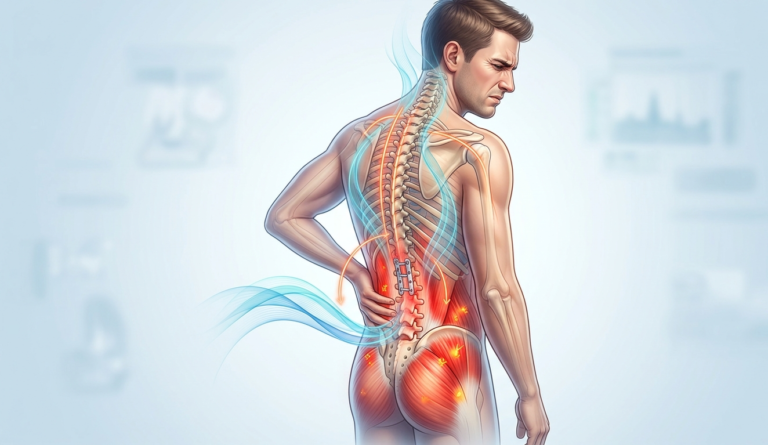
Some patients still have neck or low back symptoms after surgery because the remaining spine segments can develop altered motion patterns or instability. DMX can evaluate how spinal segments move in real time, helping providers identify motion-based drivers that static imaging may not fully explain.
- Persistent symptoms after surgery are often mechanical and motion-dependent.
- DMX helps assess motion patterns (translation + angulation) and compensation.
- Findings can guide safer rehab progressions and more precise next steps.
Last updated: April 7, 2026.
Reviewed by: DMX Miami clinical team.
Many patients feel discouraged after spinal surgery when they hear:
- “The surgery looks good.”
- “Your hardware is stable.”
- “Your MRI doesn’t show anything major.”
Yet they still experience:
- pain with certain movements.
- fatigue with posture.
- symptoms that flare with standing, driving, or turning.
- “good days and bad days” that seem motion-triggered.
At DMX Miami, we see this in people from Miami, Fort Lauderdale, Miami-Dade, Broward, the Florida Keys, and visitors from the USA, Colombia, Chile, Argentina, Mexico, and the Caribbean who want better clarity before making the next decision.
Why Symptoms Can Persist After Surgery
Surgery changes load-sharing
When a segment is fused or surgically altered, other segments may:
- take on more motion.
- hinge more aggressively.
- compensate with abnormal sequencing.
Instability can occur above or below
“Adjacent segment” stress can create motion-sensitive pain even when surgical outcomes are technically successful.
Static imaging may not show the functional story
MRI and X-rays can show structure and hardware, but they may not show how segments behave during movement arcs that reproduce symptoms.
Why Motion-Based Evaluation Matters
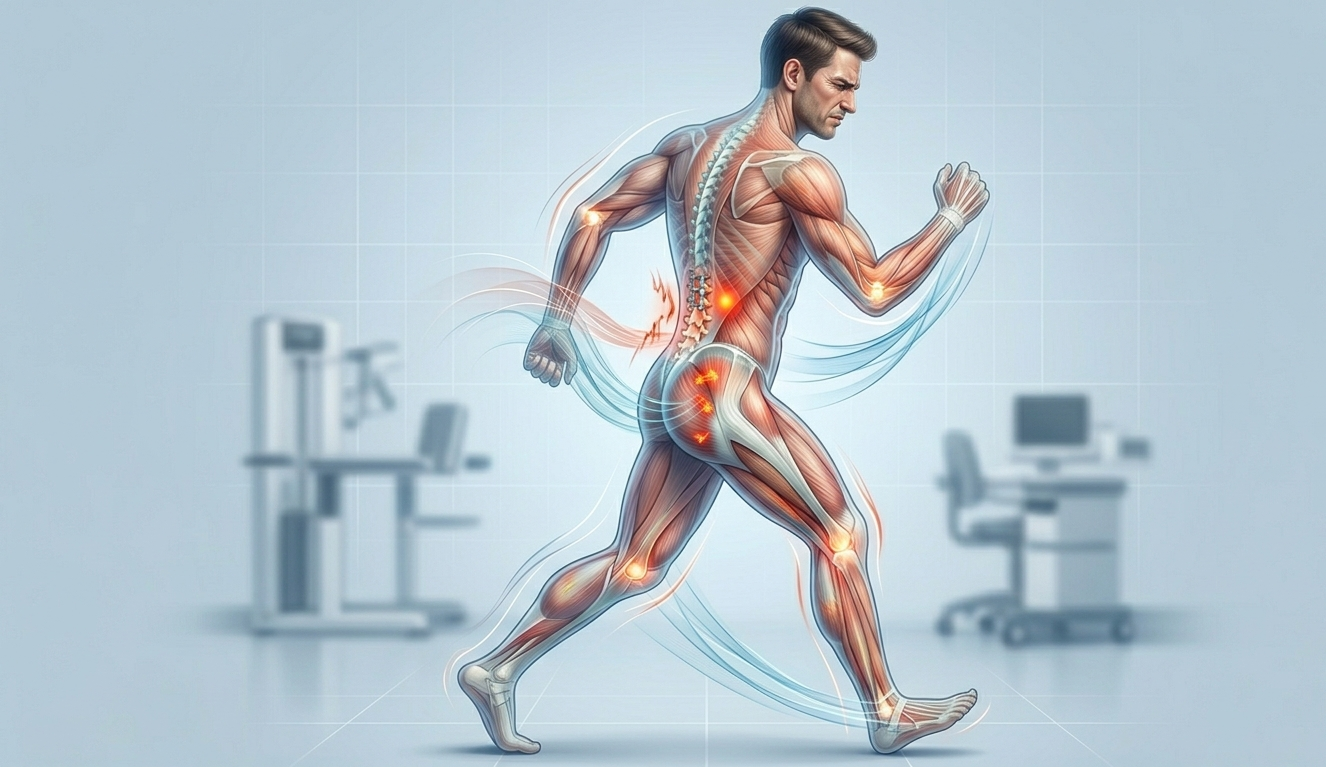
If your symptoms are tied to:
- transitions (sit-to-stand).
- bending and returning upright.
- rotation while driving.
- looking up/down.
…then your symptoms may be mechanics-first.
How Digital Motion X-Ray Helps
DMX evaluates spinal motion through guided movement. Providers can assess:
- Translation and angulation behavior between segments.
- whether one segment is hypermobile while others are stiff.
- motion patterns that correlate with functional triggers.
How DMX Can Change the Plan
Depending on findings, your team may:
- focus rehab on stabilization and controlled motion.
- adjust exercise selection to protect vulnerable segments.
- reduce trial-and-error by targeting the true mechanical driver.
- coordinate with your surgeon or pain specialist with more objective motion data.
Who Should Ask About DMX After Surgery
Consider discussing DMX if:
- symptoms persist despite “good” post-op imaging.
- your pain is clearly movement-triggered.
- you feel catching, shifting, or motion-related fatigue.
- you’re trying to avoid unnecessary additional procedures.
FAQs
Is it normal to still have pain after back or neck surgery?
Some patients do, especially if motion mechanics and compensation patterns persist or develop over time.
Can DMX show problems that MRI misses after surgery?
DMX evaluates motion patterns; MRI is static. They answer different questions.
Does DMX evaluate hardware stability?
DMX is primarily used for motion mechanics; hardware evaluation is typically done with standard imaging. Your provider decides what’s appropriate.
Can DMX help guide rehab after surgery?
Yes. Motion findings can influence stabilization, exercise progression, and movement restrictions.
References
- NCBI/PubMed: Adjacent segment disease and post-fusion biomechanics literature (overview of compensation patterns).
- AAOS/OrthoInfo: Post-surgical spine mechanics education (general patient guidance).
Learn more: Treatment
Schedule your appointment today:Appointments
Call 305-275-7475 orbook your appointment online

Dr. Rodolfo Alfonso, D.C.
Dr. Mark N. Berry, D.C.
Sunset Chiropractic and Wellness
8585 Sunset Dr. STE 102
Miami, Florida 33143