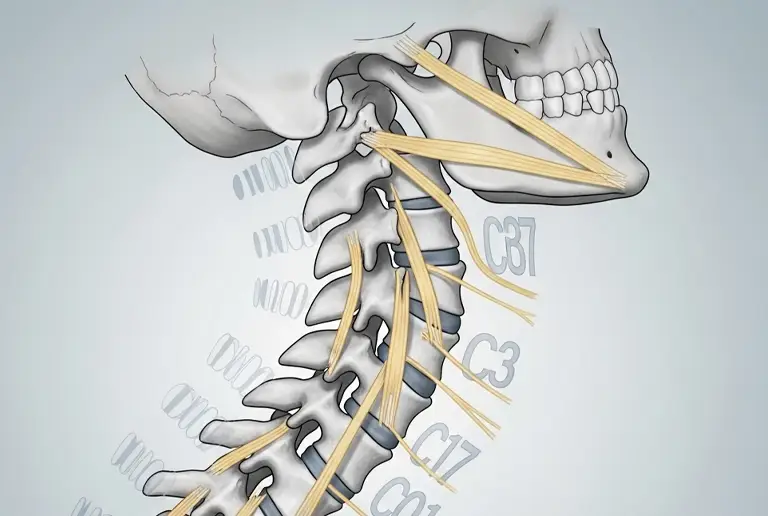
Understanding Cervical Kyphosis and Ligament Damage
The cervical spine has a natural forward curve called lordosis, which balances the head and reduces stress on the spinal cord and supporting tissues. When this curve is lost and the spine begins to bend in the opposite direction, the condition is known as cervical kyphosis.
Cervical kyphosis is often associated with ligament damage. The ligaments are meant to stabilize the vertebrae and allow safe motion. When they become overstretched or torn whether due to trauma, repetitive stress, or poor posture they fail to keep the cervical curve intact. This leads to instability, abnormal pressure on nerves, and a chain reaction of pain and dysfunction.
Why Standard Imaging Fails to Identify Ligament Laxity
MRI and CT scans are valuable tools, but both are limited by being static. They capture the neck while the patient is lying still, which means they cannot show how the vertebrae move in real time. This is a major problem when trying to diagnose ligament laxity the very condition that causes abnormal spinal motion.
This is why Digital Motion X-Ray (DMX) is essential. By imaging the cervical spine in real time as the patient moves, DMX exposes abnormal gaps, shifting vertebrae, and hidden instability that are invisible in standard scans. For patients with cervical kyphosis, DMX provides the missing piece of the puzzle.
Symptoms of Cervical Kyphosis with Ligament Instability

Patients suffering from cervical kyphosis often describe symptoms beyond just neck pain. These include:
- Chronic headaches and migraines
- Dizziness and balance issues
- Tingling or numbness in the arms
- Muscle weakness in the shoulders and hands
- Visual disturbances
- Difficulty concentrating
These symptoms occur because ligament instability alters how the spine moves, irritating the spinal cord and nerves. Without the right diagnostic imaging, many patients are left without answers, told their scans are “normal” while their symptoms persist.
How Digital Motion X-Ray Identifies the True Source of Damage
By visualizing the spine as it moves, Digital Motion X-Ray in Miami shows how vertebrae behave when ligaments fail. Instead of assuming the spine is stable, DMX allows doctors to see instability in action. This makes it possible to design treatments that address the root cause not just the symptoms.
In cases of cervical kyphosis, DMX can confirm whether ligament damage is contributing to the abnormal curvature. Once the instability is identified, patients can pursue corrective care tailored to their unique condition.
Why Miami Patients and International Visitors Choose DMX
Our Miami clinic has become a destination for patients not only from Florida but also from Central and South America, including Colombia, Argentina, Chile, and Mexico. These patients often arrive after exhausting conventional options in their home countries. Many speak Spanish, and with our bilingual team, we ensure that every patient receives clear explanations of their condition and treatment.
Miami serves as an ideal hub, allowing patients from across the Americas to access cutting-edge technology like DMX that may not be widely available in their own regions.
Taking the Next Step Toward Recovery
If you have been diagnosed with cervical kyphosis, or if you experience persistent neck pain, headaches, or neurological symptoms despite “normal” MRI or CT results, it is time to look deeper. Digital Motion X-Ray in Miami reveals the hidden ligament instability that could be the true cause of your suffering.
By identifying the problem accurately, you can finally pursue treatments that stabilize your spine, reduce pain, and prevent further damage. Don’t settle for incomplete answers schedule your DMX evaluation today.
Call 305-275-7475 or book your appointment online

Dr. Rodolfo Alfonso, D.C.
Dr. Mark N. Berry, D.C.
Sunset Chiropractic and Wellness
8585 Sunset Dr. STE 102
Miami, Florida 33143
305-275-7475
Schedule Your DMX Today
You’ve been searching for answers. Now you can see the cause of your symptoms in motion.
Visit us in Miami
Call 305-275-7475
Request an appointment online
Follow us on Instagram, Facebook, and YouTube for updates, patient success stories, and expert insights on neuropathy treatment!