
Digital Motion X-Ray for Modern Posture Problems with a Past Trauma History.
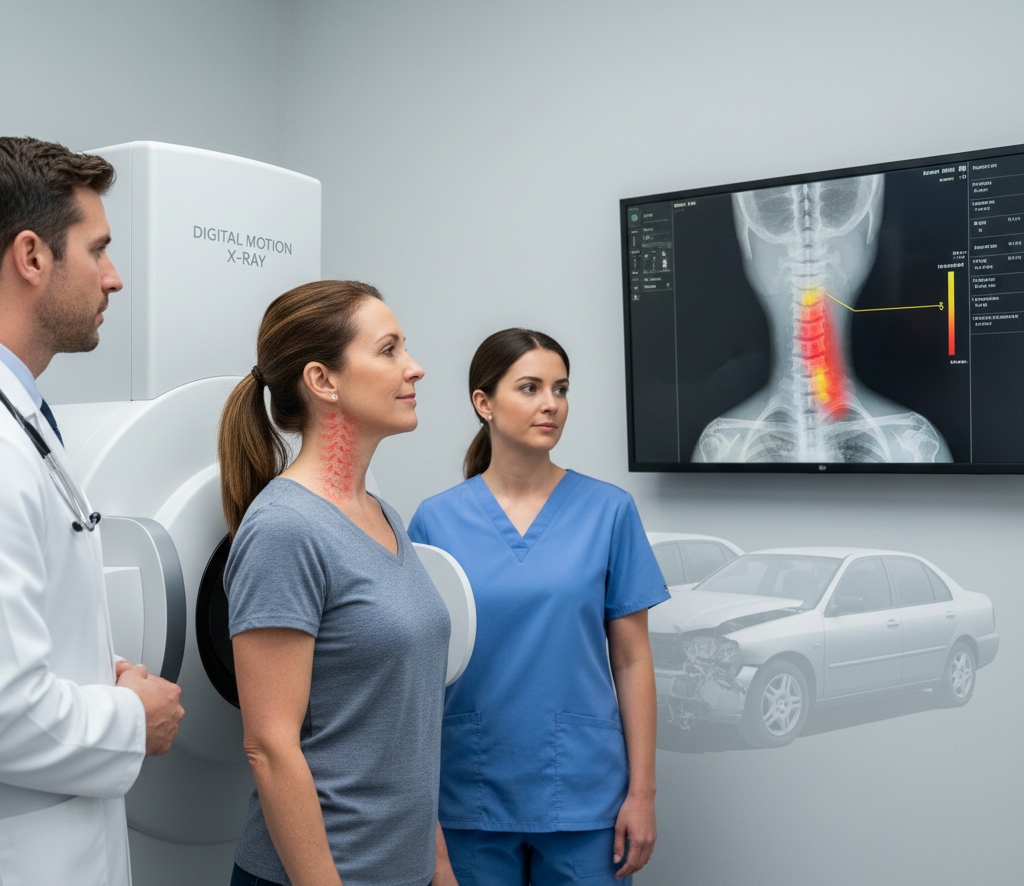
People in Miami, Fort Lauderdale, Miami-Dade, Broward, the Florida Keys, Florida and the USA, Central and South America (Colombia, Chile, Argentina, Mexico), and the Caribbean are spending more time than ever:
- At computers.
- On phones and tablets.
- Driving or traveling for work.
Many are told they have “tech neck” forward head posture and muscle strain from modern life. But at DMX Miami, we often see another layer to the story:
“My neck never felt right after that old car accident, and sitting all day makes it worse.”
The question becomes: is this just posture, or is there underlying cervical instability from past trauma that posture is aggravating?
How Old Injuries and New Habits Collide.
A prior whiplash, sports injury, or fall may have:
- Stretched or partially damaged cervical ligaments.
- Created minor instability that your body compensated for.
- Left you with occasional stiffness or headaches.
Then, years later, you add:
- Long hours of forward head posture at a desk.
- Repetitive micro-strain from phone and device use.
- More sitting and less movement overall.
This combination can overwhelm the system, leading to:
- Chronic neck and upper back pain.
- Frequent headaches or shoulder tension.
- Tingling or discomfort into the arms.
- A feeling that your neck is “tired” or unstable by the end of the day.
Why Posture Exercises Alone Don’t Always Fix It.
Common tech neck advice includes:
- Chin tucks.
- Stretching the chest and front of the shoulders.
- Strengthening upper back muscles.
These can be helpful, but if there is underlying ligament instability, aggressive stretching or strengthening in the wrong way can:
- Irritate already unstable segments.
- Increase symptoms rather than resolve them.
- Leave you wondering why you’re doing “everything right” but still hurting.
Before you assume it’s “just posture,” it’s worth asking: how stable is your cervical spine when it moves?
How Digital Motion X-Ray Evaluates Stability in a “Tech Neck” Patient.
At DMX Miami, Digital Motion X-Ray:
- Uses fluoroscopic video X-ray to evaluate your neck in motion.
- Records how each vertebra moves when you bend, extend, and rotate.
- Measures abnormal translation and angulation that suggest ligament laxity.
- Helps correlate:
- Old trauma history.
- Current posture demands.
- Motion patterns that drive your symptoms.
Instead of guessing, your providers can see whether portions of your neck are moving too much, not enough, or in an abnormal pattern.
How DMX Findings Help Create a Smarter Care Plan.
If DMX reveals instability or abnormal motion, your care team can:
- Emphasize stability-focused rehab rather than only stretching.
- Avoid certain high-velocity techniques at unstable segments.
- Tailor ergonomic and posture strategies to protect vulnerable levels.
- Combine tech neck management with trauma-informed cervical care.
This gives you a plan that respects both your modern lifestyle and your injury history.
When to Consider DMX for Tech Neck Symptoms.
You might ask your provider about DMX if:
- You’ve had one or more car accidents or significant neck injuries in the past.
- Neck pain, headaches, or arm symptoms are getting worse with desk work.
- Standard imaging (X-ray, MRI) doesn’t explain the severity of your symptoms.
- Posture-based rehab has helped only partially or not at all.
Patients from office-heavy professions all over South Florida, the USA, Central and South America, and the Caribbean seek DMX evaluation when they suspect posture plus old trauma is a bigger issue than “just tight muscles.”
It’s Not Just Your Desk It Might Be What Your Neck Is Doing at the Desk.
Modern work environments put a lot of demand on cervical stability. Digital Motion X-Ray can help you and your providers see whether hidden instability from past injuries is turning normal tech neck into a chronic pain problem.
👉 If you have tech neck with a history of neck trauma, ask your provider whether cervical DMX could clarify what’s really going on, then contact our office.
Learn more: Treatment
Schedule your appointment today:Appointments
Call 305-275-7475 orbook your appointment online

Dr. Rodolfo Alfonso, D.C.
Dr. Mark N. Berry, D.C.
Sunset Chiropractic and Wellness
8585 Sunset Dr. STE 102
Miami, Florida 33143.