
Digital Motion X-Ray for “Stacked” Whiplash Injuries
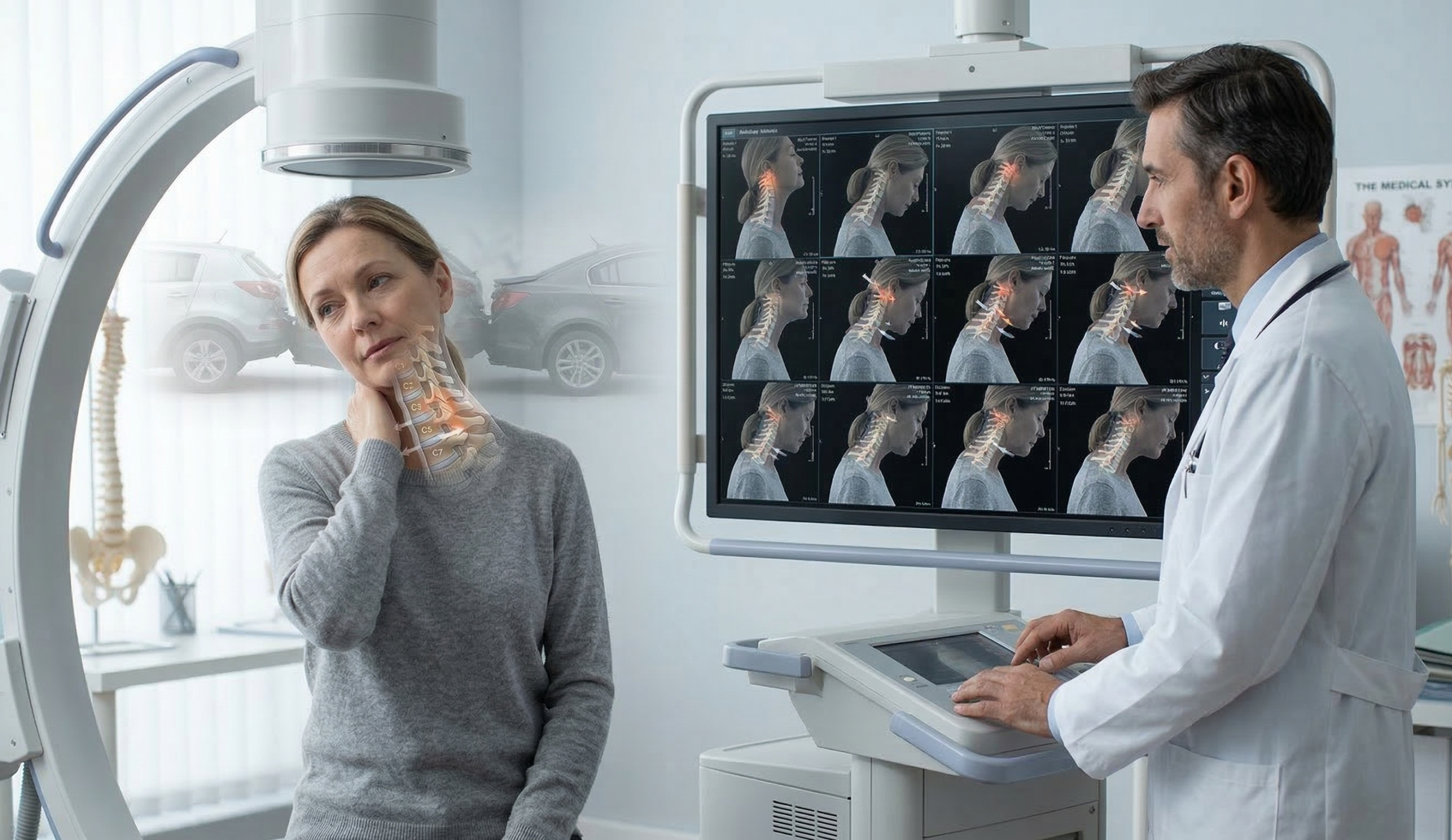
Many people in South Florida have been in more than one crash. Miami traffic, heavy tourism, and constant stop-and-go driving make rear-end impacts common.
A pattern we hear at DMX Miami:
- “The first accident was bad, but the second one changed everything.”
- “I never fully recovered, then I got hit again.”
- “Now my neck feels fragile.”
When injuries “stack,” subtle instability from the first event can be worsened by the second, leading to symptoms that are:
- More persistent.
- More motion-sensitive.
- Harder to explain on standard imaging.
Why the Second Impact Can Hit Harder
Even if both crashes were “low speed,” the second crash happens to a spine that may already have:
- Ligament laxity.
- Muscle guarding patterns.
- Compensations and altered motion.
- Partially healed tissues that never regained full stability.
The second impact can push a borderline-stable segment into a more unstable range especially in the cervical spine.
Symptoms Common in Repeat Whiplash Cases
- Headaches at the base of the skull.
- Neck fatigue and heaviness.
- Pain with turning to check blind spots.
- Dizziness or visual strain in some patients.
- Upper back and shoulder tension.
- Symptoms that flare with desk work or long drives.
Why “Normal MRI” Doesn’t End the Conversation
MRI can look fine while the real issue is:
- Segmental motion behavior.
- Ligament control during motion.
- Instability that appears only when moving.
That’s why repeated whiplash cases often benefit from motion-based evaluation.
How Digital Motion X-Ray Helps in “Stacked Injury” Cases
DMX provides:
- Real-time video of cervical motion.
- Measurement of translation and angulation.
- Identification of specific segments that appear hypermobile or irregular.
This helps providers build a plan based on which levels are unstable not just “you have whiplash.”
Why This Can Change Treatment and Documentation
When motion abnormalities are identified, providers can:
- Shift rehab toward stabilization (not just stretching).
- Protect unstable segments during manual care.
- Set realistic expectations for recovery time.
- Provide clearer documentation when needed in injury-related cases.
If You’ve Had More Than One Rear-End Impact, Don’t Treat It Like “Just Another Strain”
Repeat accidents can change the mechanical stability of the spine. If symptoms persist, DMX can help clarify whether motion-based instability is part of your picture.
👉 Ask your provider whether cervical DMX is appropriate after repeat rear-end injuries.
👉 Contact DMX Miami to coordinate an ordered study.
Learn more: Treatment
Schedule your appointment today:Appointments
Call 305-275-7475 orbook your appointment online

Dr. Rodolfo Alfonso, D.C.
Dr. Mark N. Berry, D.C.
Sunset Chiropractic and Wellness
8585 Sunset Dr. STE 102
Miami, Florida 33143