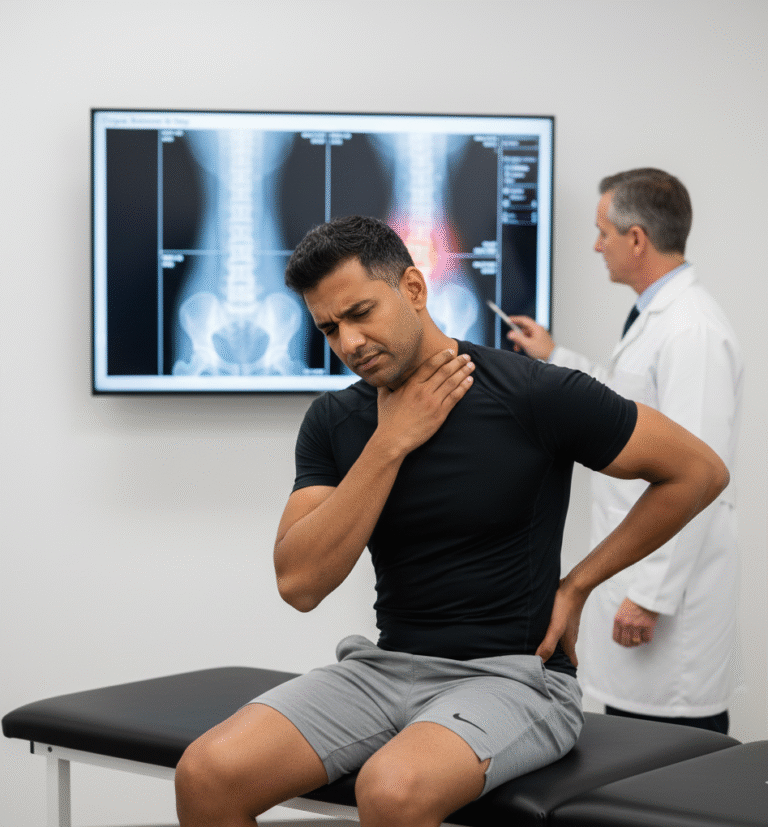
When “Just a Sprain” Keeps You Off the Field or Out of the Gym
Athletes and active people expect some soreness, but persistent neck or back pain after a sports injury is different. Maybe you had a collision on the field, a hard fall while surfing or biking, or a weight-training mishap. Weeks or months later, you still struggle with pain, stiffness, or loss of performance even though imaging hasn’t shown a major disc herniation or fracture.
At DMX Miami, we see active patients and athletes from Miami, Fort Lauderdale, Miami-Dade County, Broward County, and the Florida Keys, and from Florida, the USA, Central and South America (including Colombia, Chile, Argentina, and Mexico), and the Caribbean, who are held back by spine injuries that involve subtle instability and ligament damage.
How Sports Injuries Can Damage Spinal Ligaments
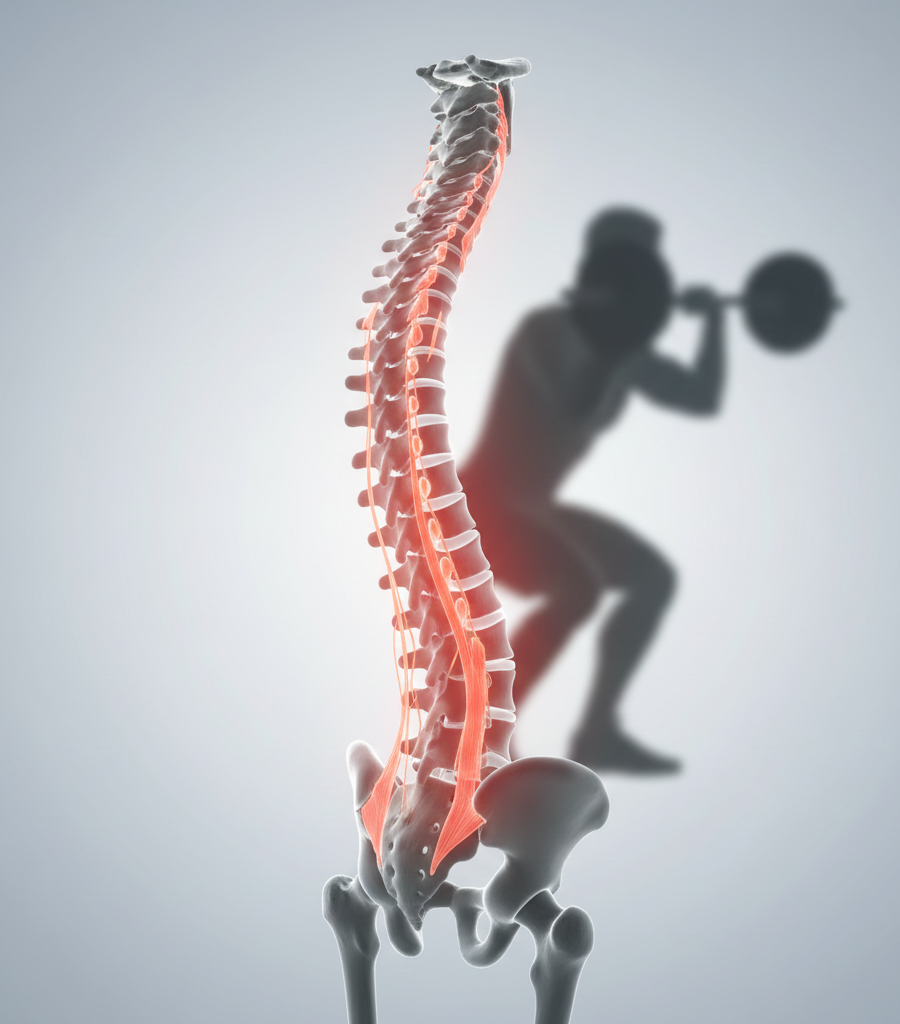
During a sports injury, the spine may be forced into extreme positions:
- Sudden hyperextension or flexion tackling or being tackled.
- Rotational forces during golf, tennis, or baseball swings.
- Compressive forces from heavy squats, deadlifts, or overhead lifts.
- High-impact falls while surfing, diving, or playing contact sports.
These forces can stretch or tear ligaments that:
- Keep vertebrae properly aligned.
- Control how far joints can move.
- Protect nerves, discs, and surrounding tissues.
When ligaments are compromised, the result can be micro-instability small but significant abnormal movements that cause pain and reduce performance.
Signs Your Sports Injury May Involve Instability
Look for patterns like:
- Pain that worsens with specific sports movements or positions.
- Neck stiffness and headaches that flare after practice or games.
- Low back pain that spikes with lifting, bending, or twisting.
- A sense of “weakness” or lack of stability in the trunk or neck.
- Symptoms that improve with rest but return quickly when you try to resume activity.
These may indicate that your spine is not moving in a stable, controlled way.
Why Traditional Imaging May Not Show the Problem
Standard imaging plays an important role in sports medicine:
- X-rays check for fractures and gross misalignments.
- MRI evaluates discs, nerves, and major soft-tissue injuries.
- CT provides detailed bone imaging.
But these images are usually taken in non-loaded, static positions. If the primary issue is instability that appears only when you:
- Rotate to swing.
- Extend for a serve.
- Load the spine under a barbell.
…then static imaging may not capture it. That’s where Digital Motion X-Ray can help.
How Digital Motion X-Ray Serves Active Patients and Athletes
Digital Motion X-Ray (DMX) lets us watch your spine in motion. At DMX Miami, we can:
- Record real-time movement in your cervical, thoracic, or lumbar spine.
- Observe how vertebrae behave under controlled flexion, extension, and rotation.
- Measure abnormal translation or angulation that indicates ligament laxity.
- Correlate movement patterns with the positions that reproduce your symptoms.
This dynamic view can reveal:
- Hidden instability affecting performance and pain.
- Levels that may require specific stabilization or targeted treatment.
- Motion-related triggers that static imaging could not show.
Using DMX to Guide Safer Return-to-Play Decisions
DMX findings can help your care team:
- Design sport-specific rehabilitation and stabilization programs.
- Decide when it is safe to increase load or intensity.
- Target regenerative treatments (PRP, prolotherapy, etc.) at the right ligaments.
- Support informed decisions about short- and long-term risk.
- Provide documentation for return-to-play discussions with coaches, teams, or governing bodies.
The goal is to help you return to sport safely and confidently, with a clear understanding of your spine’s current condition.
Why Athletes Travel to DMX Miami
Active patients and athletes choose DMX Miami because we offer:
- Advanced motion-based spinal imaging not available in many clinics.
- Experience working with sports-related neck and back injuries.
- Detailed reports that integrate with chiropractic, physical therapy, and sports medicine care.
- Bilingual support (English and Spanish) for athletes traveling from:
- South Florida: Miami, Fort Lauderdale, Miami-Dade County, Broward County, and the Florida Keys.
- The rest of Florida and the United States.
- Central and South America (Colombia, Chile, Argentina, Mexico).
- The Caribbean.
Don’t Let a “Hidden” Spinal Injury End Your Season
If pain, stiffness, or instability is keeping you sidelined after a sports injury, and your imaging hasn’t provided clear answers, motion-based testing may be the next step.
Learn more: Treatment
Schedule your appointment today: Appointments
Call 305-275-7475 or book your appointment online

Dr. Rodolfo Alfonso, D.C.
Dr. Mark N. Berry, D.C.
Sunset Chiropractic and Wellness
8585 Sunset Dr. STE 102
Miami, Florida 33143