
How Digital Motion X-Ray Helps Evaluate Upper Cervical Instability
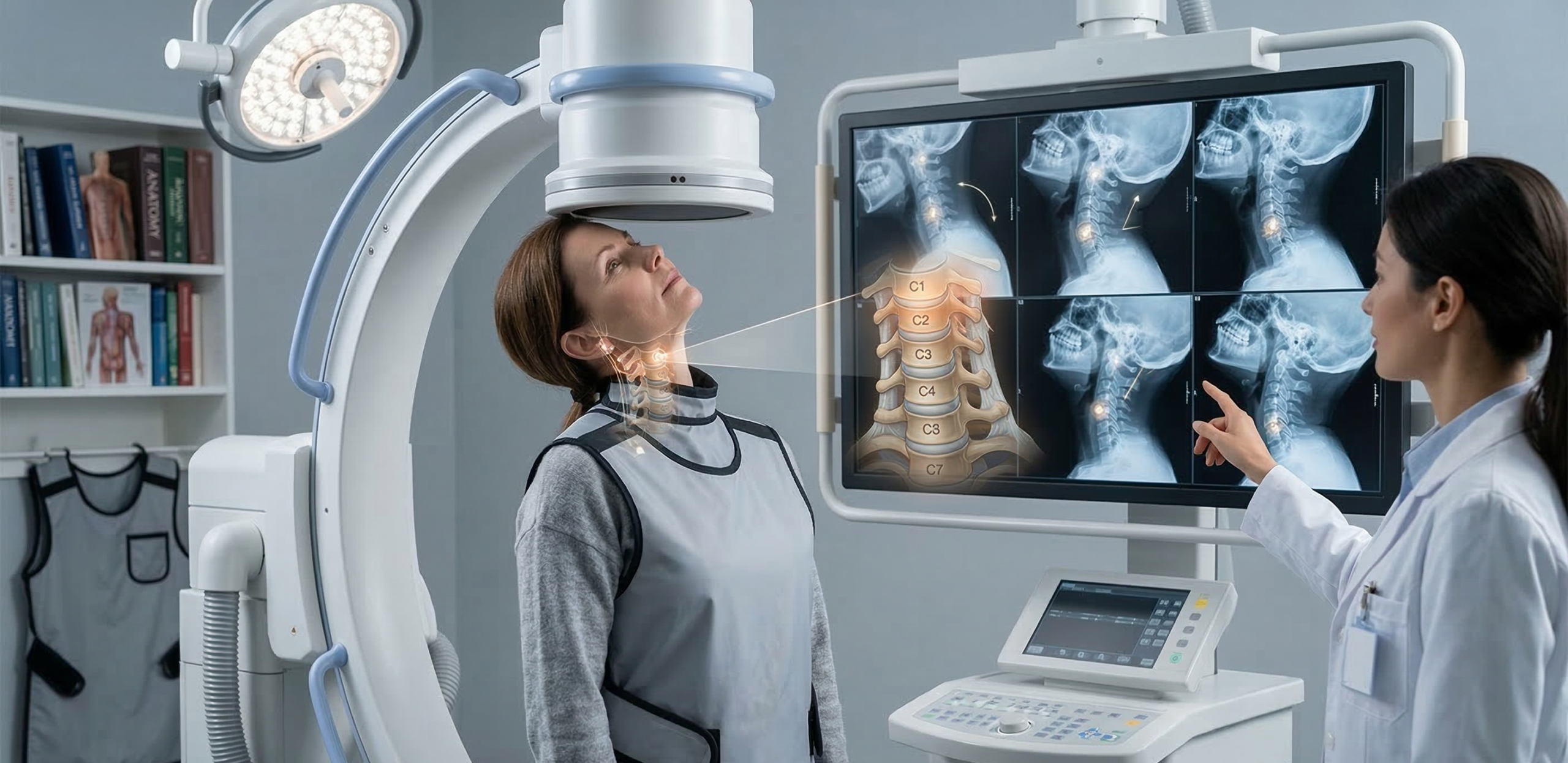
Many people assume ringing in the ears (tinnitus) or ear pressure must be an “ear problem.” But a surprising number of patients report these symptoms after a neck injury, especially:
- Rear-end car accidents.
- Whiplash events.
- Falls.
- Sports collisions.
At DMX Miami, we see patients from Miami, Fort Lauderdale, Miami-Dade County, Broward County, the Florida Keys, and across Florida, plus visitors from the USA, Central and South America (Colombia, Chile, Argentina, Mexico) and the Caribbean, who say things like:
- “My ears started ringing after the crash.”
- “I feel pressure or fullness, but ENT tests don’t explain it.”
- “The symptoms flare when my neck is tight.”
This doesn’t mean every tinnitus case is neck-related but when symptoms begin after trauma and change with head/neck position, the upper cervical spine deserves evaluation.
Why Neck Mechanics Can Affect Ear Symptoms
The upper neck (C0 – C2 region) is closely linked to:
- Posture and head positioning.
- Muscle tension patterns around the skull and jaw.
- Nerve pathways that can refer discomfort to the head and face.
After whiplash, cervical ligaments and joints can be strained. When instability or abnormal motion exists, it can create:
- Persistent muscle guarding.
- Head/neck tension patterns.
- Motion-triggered symptom flares.
That’s why some people notice tinnitus/pressure changes when they:
- Turn their head to drive.
- Look down at phones.
- Sleep “wrong.”
- Spend long hours at a computer.
Why Standard Imaging Can Miss the Neck Component
Typical testing includes:
- ENT exams and hearing tests.
- Brain imaging when indicated.
- Static cervical X-rays or MRI.
These are important, but they often don’t evaluate how the cervical spine behaves in motion. If symptoms are provoked by movement, a still image can look “fine” while the real problem is mechanical instability during motion.
How Digital Motion X-Ray Helps
Digital Motion X-Ray (DMX) is a fluoroscopic video X-ray that records cervical motion through controlled, guided movements. It allows providers to evaluate:
- Abnormal translation (sliding) between vertebrae.
- Abnormal angulation (tilting) between vertebrae.
- Motion asymmetries that may correlate with symptom triggers.
In cases with ear symptoms after trauma, DMX can help a provider answer:
- Is the upper cervical spine stable when it moves?
- Are certain segments moving excessively or irregularly?
- Do findings align with the patient’s movement-triggered symptom pattern?
When to Ask Your Provider About DMX
Consider discussing cervical DMX if:
- Tinnitus/ear pressure began after whiplash, falls, or sports injury.
- Symptoms vary with neck position or movement.
- ENT evaluation is reassuring but symptoms persist.
- You also have headaches, jaw tension, dizziness, or neck pain.
Patients often travel to DMX Miami from South Florida, the USA, Latin America, and the Caribbean for motion-based cervical evaluation when the usual workup doesn’t fully explain symptoms.
Ear Symptoms Can Be Real Even When Ear Tests Are Normal
If ringing or pressure began after a neck injury and seems linked to movement, it’s reasonable to evaluate the cervical spine as a potential contributing factor. DMX provides a motion-based look that static tests may miss.
👉 Ask your provider whether cervical Digital Motion X-Ray is appropriate for your case.
👉 Contact DMX Miami for information on DMX studies and reporting.
Learn more: Treatment
Schedule your appointment today:Appointments
Call 305-275-7475 orbook your appointment online

Dr. Rodolfo Alfonso, D.C.
Dr. Mark N. Berry, D.C.
Sunset Chiropractic and Wellness
8585 Sunset Dr. STE 102
Miami, Florida 33143