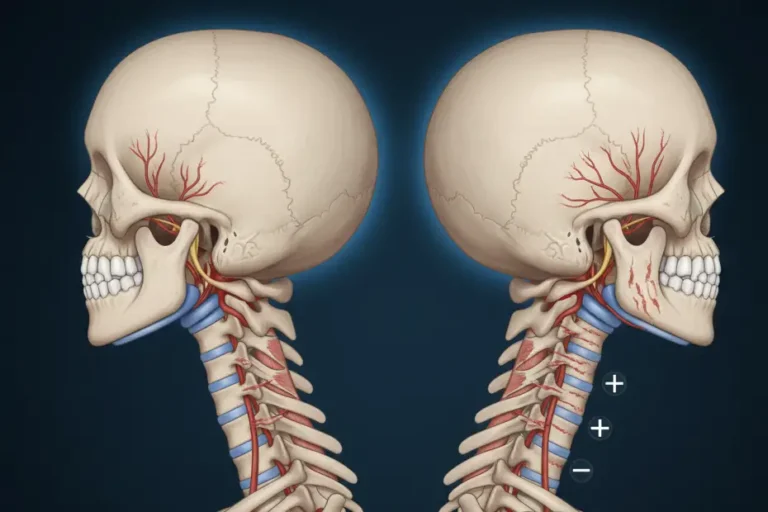
The Rise of “Tech Neck” in Daily Life
We live in a world where phones, tablets, and laptops are everywhere. In Miami, Florida, and across Central and South America including Colombia, Argentina, Chile, and Mexico people spend hours each day looking down at screens. This modern lifestyle has created a new health concern often called “tech neck.”
At first, tech neck feels like mild stiffness or discomfort after long hours of scrolling, gaming, or working online. But when left unchecked, it can lead to serious problems with the neck ligaments, causing pain, dizziness, or even long-term instability.
What Exactly Is Tech Neck?
Tech neck happens when the head is tilted forward for long periods of time. Even small forward tilts put extra strain on the cervical spine. For example:
- A neutral head position puts about 10–12 pounds of pressure on the neck.
- A 30-degree tilt forward increases pressure to 40 pounds.
- A 60-degree tilt forward increases pressure to as much as 60 pounds.
Over months and years, this constant stress doesn’t just cause sore muscles it can damage the ligaments that hold the neck vertebrae in place.
Everyday Signs of Tech Neck
Patients with tech neck often notice:
- Stiffness or soreness at the base of the neck
- Headaches after long hours on screens
- Cracking or popping noises when turning the head
- Tingling or numbness in the arms or hands
- Fatigue or “brain fog” after using devices
While many assume these are just temporary annoyances, they may actually be warning signs of ligament instability.
How Tech Neck Damages Ligaments
The ligaments of the cervical spine act like strong straps, keeping the vertebrae aligned during motion. When they are repeatedly overstretched by poor posture, they weaken over time. This ligament laxity allows the vertebrae to shift abnormally, which can:
- Irritate nerves and cause referred pain
- Reduce blood flow to the brainstem and inner ear
- Trigger headaches, dizziness, or lightheadedness
- Increase the risk of long-term neck instability
The more time spent on devices without posture correction, the greater the risk.
Why Traditional Imaging Misses Tech Neck Damage
When patients with tech neck seek help, they often undergo MRIs or X-rays, only to be told everything looks normal. The issue? These scans are static. They capture the neck at rest, not in motion.
Ligament instability is a motion problem. Unless the neck is tested while bending and rotating, the hidden damage remains invisible.
How Digital Motion X-Ray Reveals the Truth
Digital Motion X-Ray (DMX) is the most advanced tool for diagnosing ligament injuries caused by tech neck. It captures real-time video of the neck in motion, revealing:
- Abnormal vertebral sliding or gapping during head movement
- Ligament laxity that creates instability
- Instability patterns that explain symptoms like dizziness or headaches
- Objective evidence that validates patient concerns
For many patients, DMX is the first time they see the root cause of their pain.
Signs It’s Time to Get Checked

You should consider DMX if you have tech neck symptoms such as:
- Chronic stiffness that doesn’t improve with stretching
- Tingling or numbness in the hands or arms
- Headaches or dizziness triggered by posture
- Neck popping or cracking with motion
- Fatigue after long periods on screens
These are red flags that simple posture correction may not be enough.
Why Patients Travel to Miami for DMX
Our Miami clinic specializes in uncovering ligament damage caused by modern lifestyle habits like tech neck. Patients come from across Florida, the U.S., and internationally from Colombia, Argentina, Chile, Mexico, and beyond because:
- DMX is not widely available in their home countries
- We provide bilingual care in English and Spanish
- Miami is a hub for advanced, non-surgical diagnostics
This makes us the trusted choice for patients seeking answers to modern health problems.
The Benefits of an Accurate Diagnosis
Once ligament instability is identified with DMX, patients can pursue treatments such as:
- Posture-focused rehabilitation to correct alignment
- Regenerative therapies to strengthen damaged ligaments
- Personalized care plans to protect against further injury
- Long-term relief without dependence on medication
With the right diagnosis, patients can use technology without sacrificing their health.
Taking the Next Step Toward Relief
If you suspect your neck pain comes from tech neck, don’t ignore it. The damage may go deeper than muscles it could involve the ligaments that stabilize your spine. Digital Motion X-Ray in Miami provides the clarity you need.
Learn more: Treatment
Schedule your appointment today: Appointments
Protect your neck today to prevent bigger problems tomorrow.
Call 305-275-7475 or book your appointment online

Dr. Rodolfo Alfonso, D.C.
Dr. Mark N. Berry, D.C.
Sunset Chiropractic and Wellness
8585 Sunset Dr. STE 102
Miami, Florida 33143
305-275-7475
Schedule Your DMX Today
You’ve been searching for answers. Now you can see the cause of your symptoms in motion.
Visit us in Miami
Call 305-275-7475
Request an appointment online
Follow us on Instagram, Facebook, and YouTube for updates, patient success stories, and expert insights on neuropathy treatment!