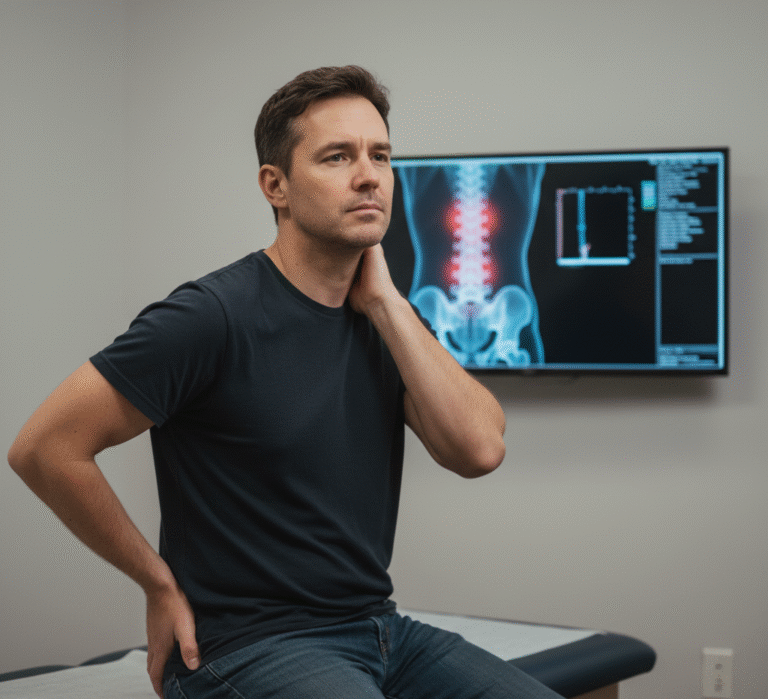
When a “Fender Bender” Leaves You with Real, Lasting Pain
You walked away from the crash. The ER said you were lucky. Your X-rays or MRI were “normal,” and you were told the soreness would fade. But weeks or months later, your neck, mid-back, or low back still hurts. Maybe you have headaches, stiffness, sharp pains with certain movements, or a constant sense that something just isn’t right.
At DMX Miami, serving patients from Miami, Fort Lauderdale, Miami-Dade County, Broward County, and the Florida Keys, as well as from across Florida, the USA, Central and South America (including Colombia, Chile, Argentina, and Mexico), and the Caribbean, we see this story every day. The accident was called “minor,” but the pain is very real. The missing piece is often ligament damage and instability that standard imaging simply doesn’t show.
Why “Minor” Crashes Can Cause Major Ligament Damage
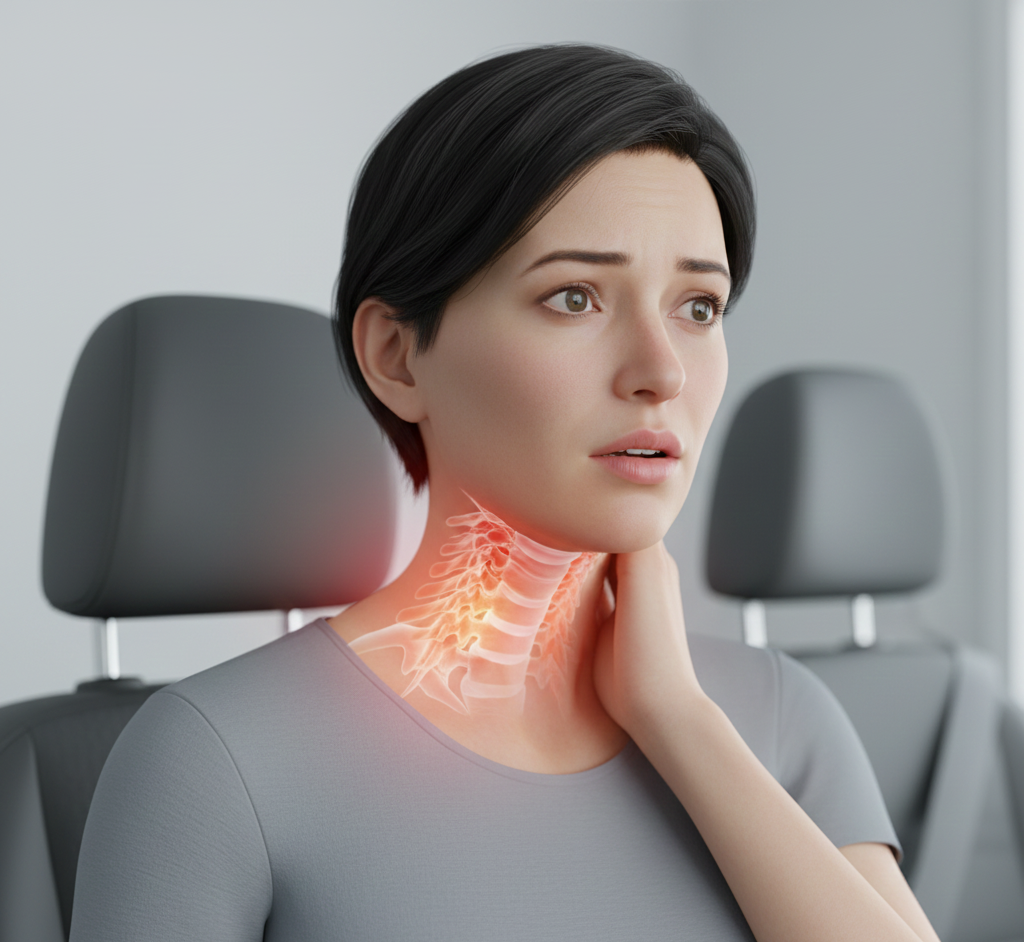
Even at lower speeds, car accidents can create powerful forces on your spine. When your body is suddenly thrust forward, backward, or sideways:
- Ligaments in the neck, mid-back, or low back can stretch beyond their normal limits.
- Joints may briefly move too far, damaging tissues that stabilize them.
- The spine can develop subtle instability that only appears during motion.
On a standard X-ray, CT, or MRI taken while you lie still, everything can look “fine.” But as soon as you stand, turn your head, or bend to lift something, those weakened ligaments can no longer control the joints properly. That’s when the pain shows up.
Symptoms That May Point to Hidden Spinal Instability
If your crash was labeled “minor” but you still hurt, look for patterns like:
- Neck pain or stiffness that flares when turning or looking up.
- Mid-back or low back pain that worsens with bending or twisting.
- Headaches, especially at the base of the skull.
- Sharp, catching pains with certain movements.
- Fatigue from constantly guarding your spine.
- Pain that never fully resolves despite therapy or medications.
These can be signs that ligamentous instability is present, even if standard imaging says everything is “normal.”
Why Traditional Imaging Often Misses Post-Accident Instability
Standard imaging is excellent for certain problems:
- MRI: discs, nerves, major soft-tissue injuries.
- CT: fractures, bone detail.
- Static X-rays: alignment in a still position.
But they all share one limitation:
They look at your spine in one position, usually lying down or standing still.
The spine is meant to move. If the ligaments that control motion are damaged, the instability often only shows up when you’re moving. When you remove gravity or movement from the equation, the unstable segment can temporarily “hide,” leading to a normal-looking report that doesn’t match how you feel.
How Digital Motion X-Ray Reveals Injuries Others Miss
Digital Motion X-Ray (DMX) is a specialized form of fluoroscopy that records a real-time video of your spine as it moves. At DMX Miami, we use this technology to:
- Watch individual vertebrae as you bend, rotate, or extend.
- Measure abnormal translation (sliding) or gapping between bones.
- Identify areas where ligaments have become lax or torn.
- Correlate your painful movements with actual structural changes.
Instead of a single snapshot, DMX provides a dynamic movie of your spine under load and in motion. This can reveal:
- Instability in the upper cervical spine (C0–C2).
- Ligament damage in the mid-cervical or thoracic region.
- Abnormal motion in the lumbar spine or at the sacroiliac joints.
For patients whose pain never matched their “normal” imaging, these findings can finally explain what has been wrong all along.
How DMX Miami Fits into Your Treatment and Recovery
DMX is a diagnostic tool, not a treatment by itself. The information it provides can:
- Guide chiropractors, physical therapists, and other providers.
- Help regenerative medicine doctors (such as those using PRP or stem cell injections) target the right levels.
- Support surgeons in deciding whether a structural issue may need more advanced intervention.
- Provide detailed documentation for attorneys and insurance adjusters in injury cases.
When your providers understand exactly where and how your spine is unstable, they can design a plan that makes sense for your body instead of guessing.
Why Patients from Florida and Beyond Choose DMX Miami
Patients travel to DMX Miami from:
- South Florida: Miami, Fort Lauderdale, Miami-Dade County, Broward County, and the Florida Keys.
- Across Florida and the United States.
- Central and South America, including Colombia, Chile, Argentina, and Mexico.
- Islands throughout the Caribbean.
They choose us because we offer:
- Advanced, motion-based imaging that detects injuries static tests miss.
- Expertise in recognizing ligamentous instability and subtle post-traumatic damage.
- Clear, detailed reports for doctors, chiropractors, and attorneys.
- Bilingual care (English and Spanish) for local and international patients.
When You’re Ready for Real Answers After a “Minor” Crash
If you’re still in pain long after a “minor” car accident, you are not imagining things and you are not alone. DMX may be the key to finally understanding what is really going on in your spine.
Learn more: Treatment
Schedule your appointment today: Appointments
Call 305-275-7475 or book your appointment online

Dr. Rodolfo Alfonso, D.C.
Dr. Mark N. Berry, D.C.
Sunset Chiropractic and Wellness
8585 Sunset Dr. STE 102
Miami, Florida 33143