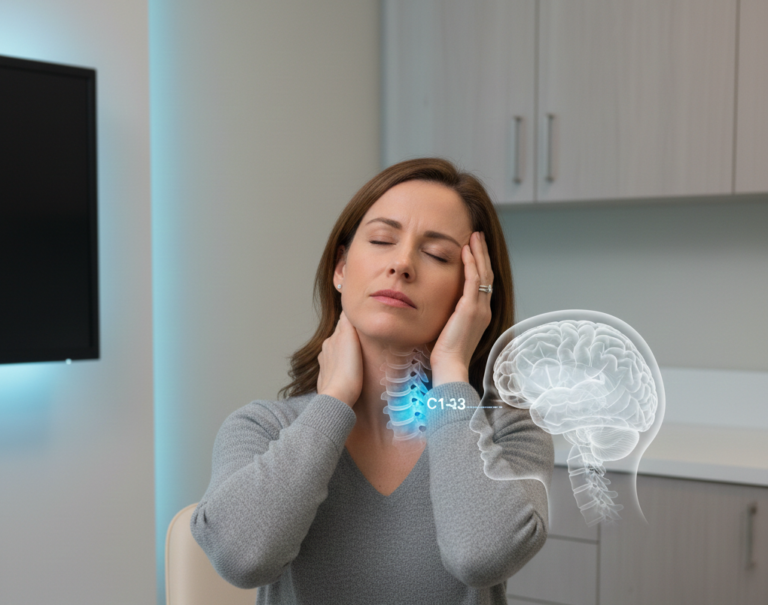
How Digital Motion X-Ray Helps When You Still Don’t Feel “Right” After a Head Injury
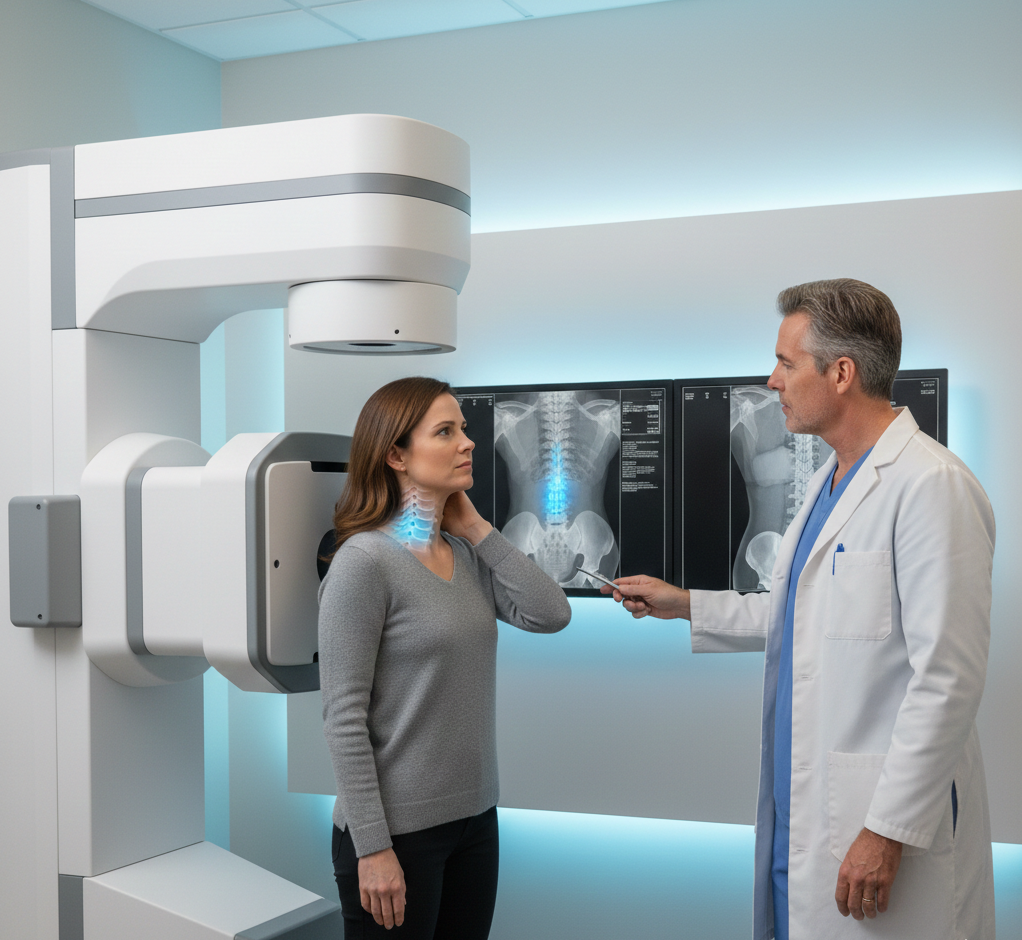
After a head injury sports hit, fall, or car accident you might be told you had a concussion. Weeks or months later, you may still have:
- Headaches.
- Brain fog or difficulty concentrating.
- Dizziness or motion sensitivity.
- Neck pain and stiffness.
- Visual discomfort in busy environments.
Standard brain imaging may be normal. Balance testing may be “okay.” Yet you still don’t feel like yourself.
At DMX Miami, we often see that part of the story lives in the upper cervical spine the top of your neck.
Why the Neck Matters After a Concussion
Head and neck injuries usually happen together. Even if the primary focus is the brain, the neck can suffer:
- Ligament strain or partial tears.
- Abnormal motion between upper cervical vertebrae.
- Irritation of joints and muscles packed with position sensors (proprioceptors).
Those sensors help your brain know:
- Where your head is.
- How fast it’s moving.
- How to coordinate eye, ear, and body information.
If the neck is unstable or irritated, those signals can become noisy or inconsistent, contributing to:
- Headaches at the base of the skull.
- Dizziness or unsteadiness, especially with head movements.
- Difficulty tolerating visual or motion-heavy environments.
Why Standard Tests Don’t Always Capture the Neck Component
Brain scans (like CT or MRI) focus on:
- Bleeds.
- Swelling.
- Structural injuries inside the skull.
Vestibular and balance tests focus on:
- Inner ear function.
- Eye movements.
- Overall balance strategies.
These are extremely important but they usually don’t evaluate how your cervical spine behaves in motion. Static neck imaging may look “okay” even when motion is abnormal.
How Digital Motion X-Ray Evaluates the Neck in Post-Concussion Cases
Digital Motion X-Ray (DMX):
- Uses fluoroscopic video to view the neck while it moves through guided ranges.
- Allows providers to measure abnormal translation and angulation between vertebrae.
- Helps identify whether particular levels, especially near the top of the neck, are:
- Moving too much (instability).
- Moving unevenly.
- Potentially contributing to your symptoms.
This doesn’t replace brain imaging or vestibular testing; it adds the mechanical neck piece.
How DMX Findings Fit into a Post-Concussion Care Plan
If DMX reveals cervical instability or abnormal motion, your care team (chiropractors, physical therapists, neurologists, vestibular therapists) can:
- Integrate cervical stabilization and posture work into rehab.
- Modify manual techniques to protect unstable segments.
- Coordinate timing and intensity of vestibular/visual rehab with what the neck can tolerate.
- Better explain why certain head positions or movements trigger your symptoms.
That can move you from a generic “post-concussion” label to a more precise, actionable plan.
Signs Your Neck May Be Part of Your Ongoing Symptoms
You and your provider might consider cervical DMX if:
- Headaches start at the base of the skull and radiate upward.
- Dizziness worsens with specific neck movements.
- You have persistent neck pain or stiffness alongside post-concussion symptoms.
- You had significant neck trauma (whiplash, sports hit, fall) with your head injury.
You’re Not Supposed to “Just Learn to Live With It”
It’s common to feel brushed off after concussions if your imaging is normal and time has passed. But if your symptoms clearly relate to motion and posture, mechanical neck issues may still be in play.
Digital Motion X-Ray is one way to evaluate whether cervical instability is keeping you from fully recovering.
👉 If you still don’t feel right after a head injury, ask your provider whether cervical DMX could help explain why, and contact our office for details.
Learn more: Treatment
Schedule your appointment today:Appointments
Call 305-275-7475 orbook your appointment online

Dr. Rodolfo Alfonso, D.C.
Dr. Mark N. Berry, D.C.
Sunset Chiropractic and Wellness
8585 Sunset Dr. STE 102
Miami, Florida 33143