
Carrying a baby, toddler, or young child can trigger neck pain, headaches, shoulder-blade burning, dizziness, or arm symptoms because it combines uneven load, posture strain, looking down, lifting, and repetitive carrying. If symptoms flare when holding a child on one hip, looking down during feeding, or carrying a car seat, the issue may involve cervical instability or poor neck-shoulder load sharing. Digital Motion X-Ray (DMX) evaluates cervical motion in real time and can help identify translation, angulation, asymmetry, hinge behavior, and instability patterns.
● Child carrying often creates uneven load through the neck, shoulders, and upper back. ● Symptoms may worsen after whiplash, falls, pregnancy-related posture changes, or repetitive lifting.
● DMX can help evaluate real-time cervical motion when daily caregiving triggers symptoms.
Last updated: April 14, 2026
Reviewed by: DMX Miami clinical team
Parents, grandparents, caregivers, teachers, and childcare workers often carry children throughout the day. Holding a child may be meaningful and necessary, but it can also be physically demanding.
At DMX Miami, we see patients from Miami, Fort Lauderdale, Miami-Dade County, Broward County, and the Florida Keys, along with patients from the USA, Colombia, Chile, Argentina, Mexico, and the Caribbean, who report neck and upper back symptoms from caregiving activities.
Patients often say:
● “My neck hurts when I carry my child.”
● “Holding the baby on one side flares my shoulder blade.”
● “Looking down during feeding gives me headaches.”
● “Carrying the car seat makes my neck burn.”
● “My arm tingles after holding my toddler.”
● “My MRI was mild, but caregiving triggers symptoms every day.”
This pattern matters because child carrying is repetitive, asymmetric, and difficult to avoid.
Why carrying a child stresses the neck
Carrying a child often involves:
● one-sided load
● shoulder elevation
● looking down
● forward head posture
● upper back rounding
● lifting from awkward positions
● twisting while holding weight
● carrying diaper bags or car seats
● fatigue over time
The cervical spine must stabilize while the shoulders and trunk manage the load.
The one-hip carrying problem
Many caregivers hold a child on one hip. This shifts the torso, elevates one shoulder, side-bends the neck, and changes spinal alignment.
Over time, this can create:
● one-sided neck pain
● upper trap tightness
● shoulder-blade burning
● headaches
● low back compensation
● arm fatigue
● jaw tension
If cervical instability is present, the neck may struggle to tolerate the repeated asymmetrical load.
Looking down during feeding or caregiving
Feeding, changing, bathing, and comforting a child often requires prolonged looking down. This can increase strain on the cervical spine, especially after whiplash or prior injury.
Symptoms may include:
● base-of-skull headache
● neck fatigue
● dizziness
● eye pressure
● shoulder-blade pain
● heavy-head feeling
Why static imaging may not explain caregiving pain
MRI, CT, and standard X-rays are useful, but carrying a child is a dynamic load task. Static imaging may not show how the neck behaves under repetitive posture, asymmetric weight, and fatigue.
Static imaging may not show:
● abnormal cervical translation
● abnormal angulation
● asymmetry
● hinge behavior
● instability during guided motion
● poor motion sequencing
● load-related cervical compensation
How Digital Motion X-Ray helps
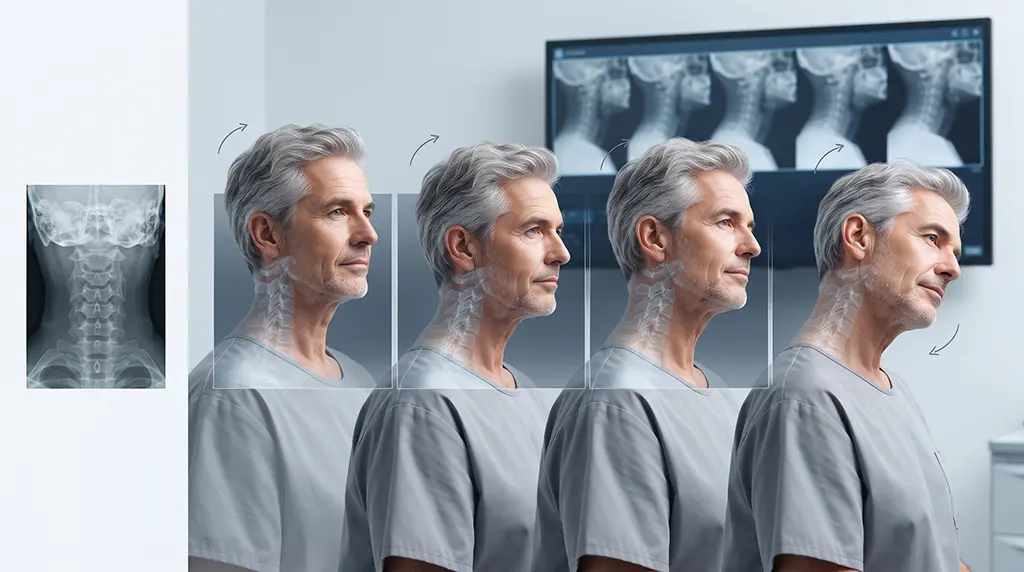
Digital Motion X-Ray uses fluoroscopic video imaging during guided cervical motion. It helps evaluate real-time cervical mechanics.
DMX may assess:
● Translation: abnormal sliding between vertebrae
● Angulation: abnormal tilting between vertebrae
● Asymmetry: left-right differences
● Hinge behavior: one segment moving too much
● Sequencing: whether movement is smooth or irregular
DMX does not replace MRI, CT, neurological evaluation, shoulder evaluation, or medical care. It complements them when symptoms are motion- or load-triggered.
How DMX findings can change care
If abnormal motion is found, care may include:
● cervical stabilization
● scapular control
● posture endurance
● lifting and carrying modifications
● feeding-position changes
● safer manual therapy choices
● gradual load tolerance progression
The goal is to help patients care for children without repeated flare cycles.
Practical steps while awaiting evaluation
● Switch carrying sides when safe
● Avoid always carrying on the same hip
● Keep the child close to the body
● Use supportive carriers appropriately
● Raise the child toward you instead of bending the neck down
● Take breaks during prolonged holding
● Avoid twisting while carrying
● Track which tasks trigger symptoms most
Safety note
Seek medical evaluation if symptoms include progressive weakness, worsening arm numbness, severe dizziness, fainting, severe headache, vision changes, or neurological symptoms.
FAQs
Why does carrying my child hurt my neck?
Child carrying often creates uneven load, shoulder elevation, forward head posture, and cervical stabilization demand.
Can holding a baby trigger headaches?
Yes. Looking down and carrying uneven weight can contribute to neck-related headache patterns.
What does DMX show?
DMX evaluates real-time cervical translation, angulation, asymmetry, hinge behavior, and motion sequencing.
Does DMX replace MRI?
No. DMX complements MRI/CT/X-ray when symptoms are motion- or load-triggered.
References
● Cleveland Clinic: Neck pain and whiplash education
● PubMed-indexed literature on cervical biomechanics and dynamic spinal motion assessment
Footer: DMX Miami serves patients in Miami, Fort Lauderdale, Miami-Dade, Broward, the Florida Keys, Florida, the USA, and visitors from Colombia, Chile, Argentina, Mexico, and the Caribbean.
Learn more: Treatment
Schedule your appointment today:Appointments
Call 305-275-7475 orbook your appointment online

Dr. Rodolfo Alfonso, D.C.
Dr. Mark N. Berry, D.C.
Sunset Chiropractic and Wellness
8585 Sunset Dr. STE 102
Miami, Florida 33143