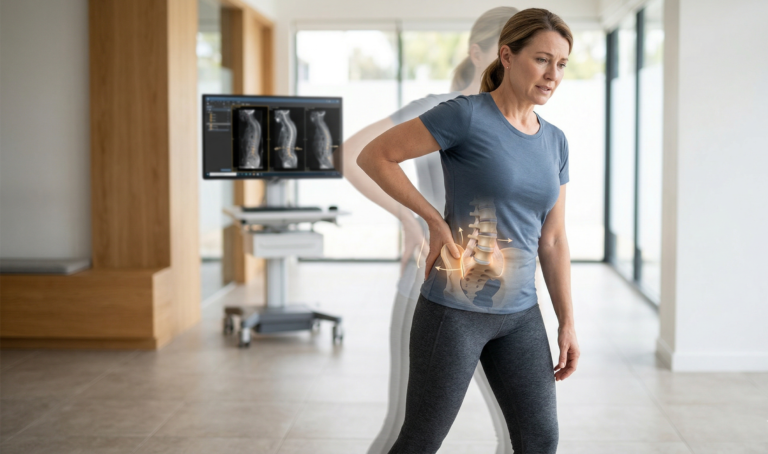
Pain labeled as SI-joint or hip pain after trauma can be driven by lumbar mechanics and compensation patterns. DMX can help evaluate how the lumbar spine moves under guided motion and whether a specific segment is behaving abnormally.
- Hip/SI-region pain can be a compensation pattern from lumbar mechanics.
- MRI is static; DMX can assess motion behavior and segment “hinging.”
- Identifying the level(s) involved can reshape rehab and exercise selection.
Last updated: March 31, 2026
Reviewed by: DMX Miami clinical team
Many people are told they have:
- SI joint dysfunction.
- hip pain.
- glute pain.
- “tight piriformis.”
But the deeper driver can be lumbar motion mechanics, especially after trauma. At DMX Miami, we see patients from Miami, Fort Lauderdale, Miami-Dade, Broward, the Florida Keys, and international visitors from Latin America and the Caribbean who report:
- pain near the beltline that spreads into buttock/hip.
- worse pain with standing, walking, or transitions.
- symptoms that don’t match “just a tight muscle.”
Why Hip/SI Pain Can Be a Lumbar Motion Problem
Trauma can alter stability patterns
After an accident or fall, lumbar ligaments and joints can become irritated or unstable. That can shift load into the SI/hip region.
One segment can “hinge” and overload nearby tissues
If one lumbar level moves too much while others stay stiff, the body compensates often with hip/SI pain.
Why MRI Can Be Incomplete for This Pattern
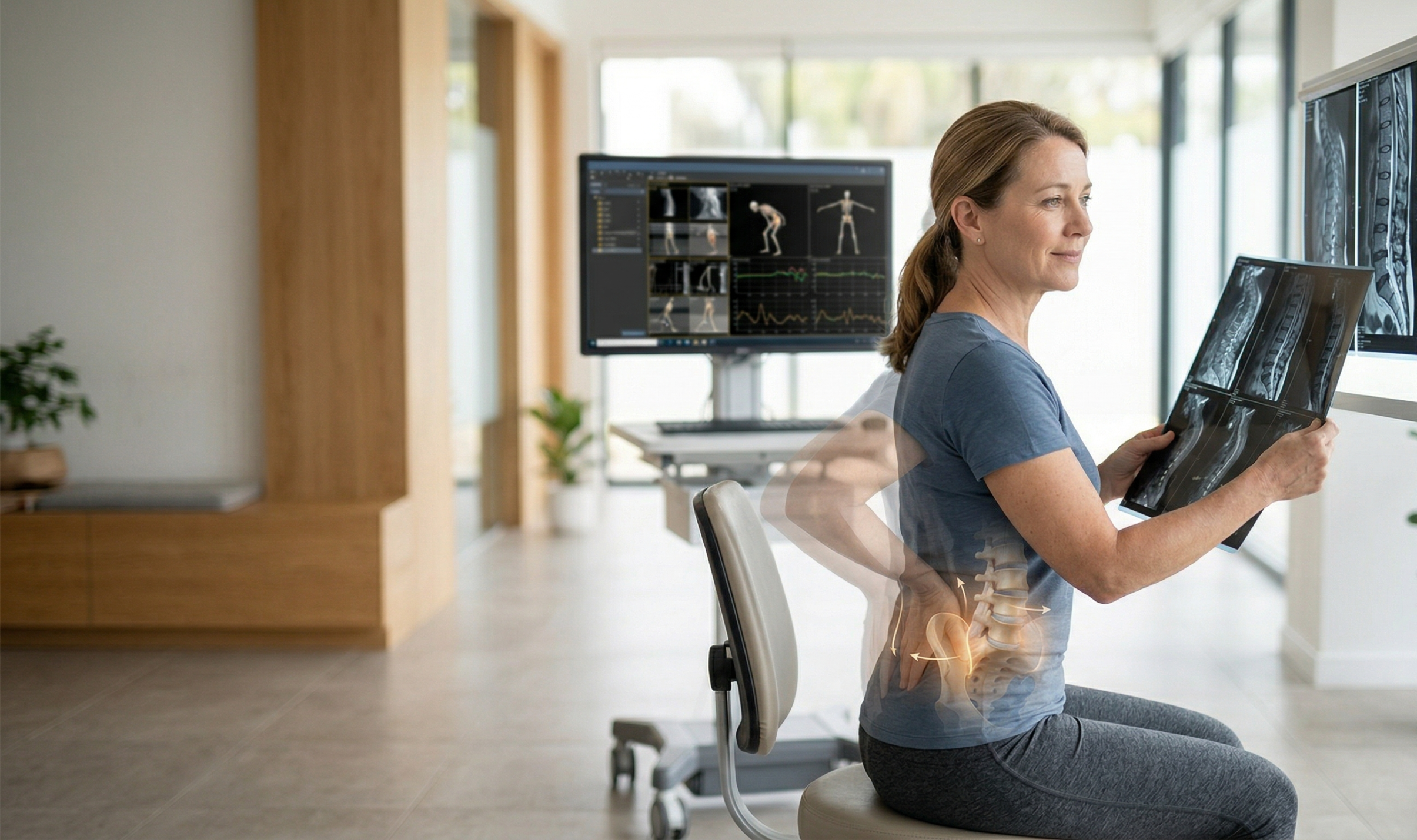
MRI is excellent for discs and nerves, but it’s usually:
- lying down.
- static.
- not showing movement sequencing and instability during posture change.
If symptoms flare when standing/walking, a motion evaluation can add value.
How Digital Motion X-Ray Helps
DMX evaluates lumbar motion through guided movement, helping providers identify:
- abnormal translation or angulation.
- uneven motion sharing between segments.
- movement patterns that correlate with SI/hip-region symptom triggers.
How DMX Findings Change Treatment Direction
If lumbar mechanics are involved, care often shifts toward:
- segment-specific stabilization.
- safer hip and core strengthening progressions.
- modifying stretches that aggravate unstable levels.
- more precise targeting if procedures are considered.
When to Ask About Lumbar DMX
Consider discussing lumbar DMX if:
- pain is triggered by standing/walking.
- transitions (sit-to-stand) spike symptoms.
- hip/SI treatments haven’t fully helped.
- injury history suggests a mechanical root cause.
Quick Self-Check: Signs Your Hip/SI Pain May Be Mechanics-Driven
Consider whether you notice:
- Pain that worsens with standing/walking more than sitting.
- A “catch” when rising from a chair or getting out of a car.
- Symptoms that improve briefly with rest, then return with load.
- One-sided buttock/hip pain that doesn’t behave like a true hip joint problem.
Why “Where It Hurts” Isn’t Always “Where It Starts”
The SI/hip region often becomes the victim of compensation when the lumbar spine isn’t sharing motion evenly. If one level hinges or slides more than it should, the body shifts load into the pelvis, glutes, and hip stabilizers creating persistent pain even when local treatments help only temporarily.
Next Steps Checklist
- Track which positions trigger pain (standing, walking, sit-to-stand, bending).
- Note whether symptoms are one-sided or shift sides.
- Ask your provider whether lumbar mechanics could be driving the SI/hip region.
- If DMX is ordered, review the motion findings with your rehab provider so exercises target the true mechanical driver.
A Simple Symptom Journal That Helps
Over 7 days, note when pain is worst (morning vs evening), what positions trigger it (standing, walking, stairs), and whether it’s truly hip-joint pain or more beltline/buttock pain. This makes it easier for your provider to connect motion findings to function.
FAQs
Can SI joint pain actually come from the low back?
Yes. Lumbar mechanics can overload the SI/hip region and mimic SI pain.
Why does my pain worsen when standing or walking?
Upright posture increases load and may reveal instability that’s hidden lying down.
What does DMX show for hip/SI-type pain?
DMX can document lumbar motion patterns, translation, and angulation during movement.
Is DMX a replacement for hip imaging?
No. It complements other imaging by evaluating spine motion when mechanics are suspected.
References
- Peer-reviewed discussions of lumbar stability, load sharing, and segmental motion concepts in spine mechanics.
- Clinical guidelines on low back pain evaluation emphasizing function and motion-related symptoms.
Call 305-275-7475 orbook your appointment online

Dr. Rodolfo Alfonso, D.C.
Dr. Mark N. Berry, D.C.
Sunset Chiropractic and Wellness
8585 Sunset Dr. STE 102
Miami, Florida 33143