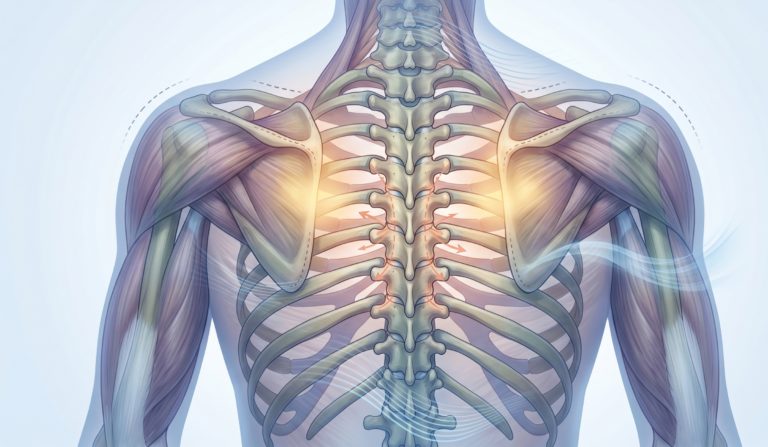
Mid-back pain between the shoulder blades can persist after accidents and posture strain when thoracic segments move abnormally or compensate for neck/lumbar problems. DMX can provide motion-based insight in complex cases where static imaging doesn’t match symptoms.
- Thoracic mechanics often get ignored in neck/back injury workups.
- Motion dysfunction can drive desk-work and driving pain patterns.
- DMX may help clarify abnormal motion behavior when symptoms are motion-dependent.
Last updated: April 14, 2026
Reviewed by: DMX Miami clinical team
Many patients are treated for the neck or low back while their mid-back pain never truly resolves. They describe:
- burning or aching between the shoulder blades.
- pain that worsens with desk posture.
- discomfort during deep breaths.
- stiffness that feels “stuck” in the mid-back.
At DMX Miami, we see this in patients across Miami, Fort Lauderdale, Miami-Dade, Broward, the Florida Keys, and visitors from the USA, Colombia, Chile, Argentina, Mexico, and the Caribbean, especially after collisions and falls.
Why Thoracic Motion Matters More Than People Think
The thoracic spine is the bridge
It connects the neck and low back. If thoracic motion is impaired, other regions compensate.
Trauma can strain thoracic segments
Seatbelts, sudden deceleration, and bracing can load the mid-back even when symptoms are not obvious on day one.
Posture strain stacks on top
Long laptop work and forward head posture increase thoracic strain and stiffness.
Why Static Imaging May Not Explain Mid-Back Pain
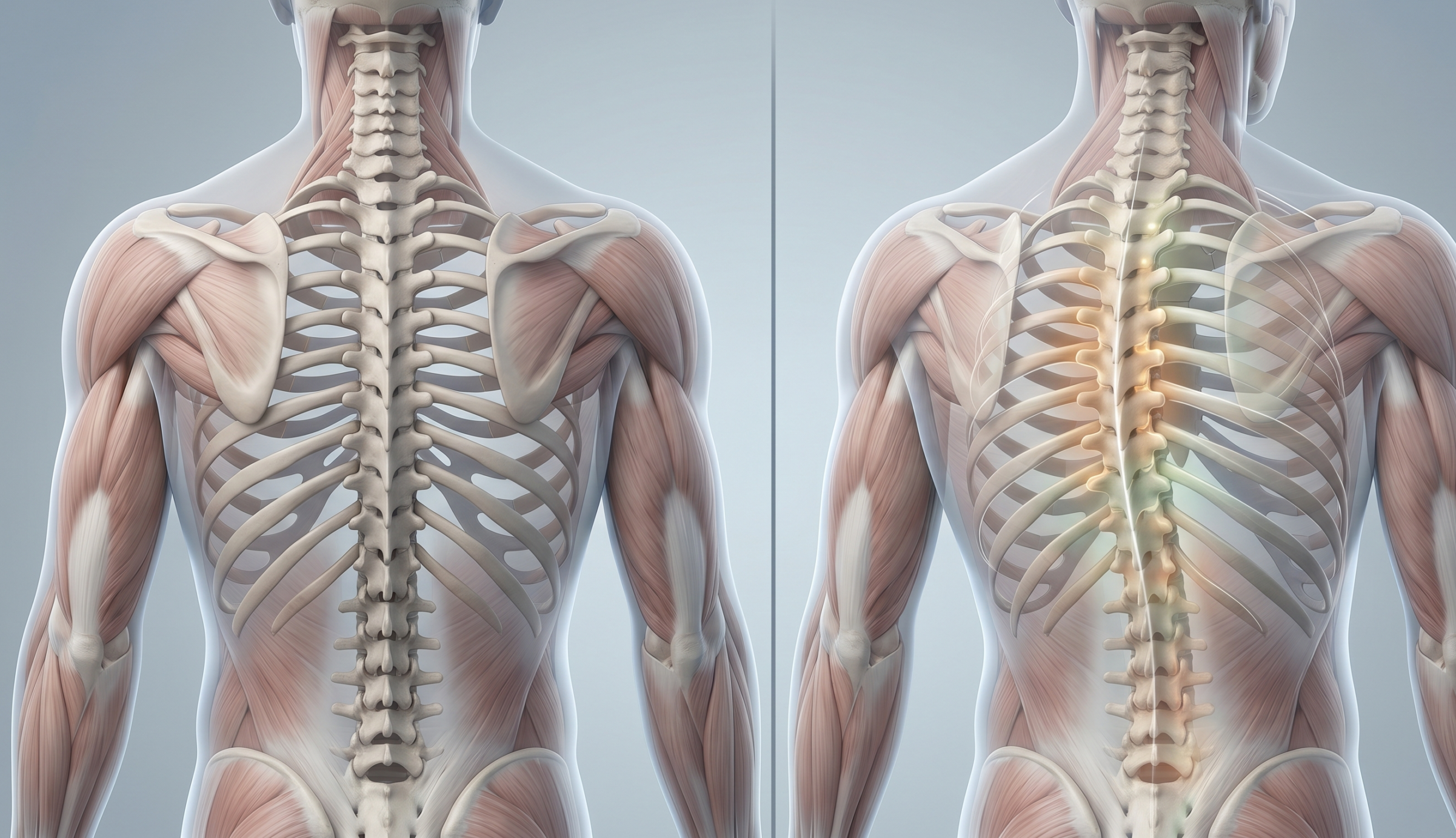
X-rays and MRI can show structure but may not show:
- uneven motion sharing.
- hinge points.
- motion sequencing problems.
especially when symptoms are triggered by posture and movement.
How DMX Can Help in Thoracic Cases
When ordered in appropriate cases, DMX can evaluate motion behavior and help providers understand whether:
- a segment moves too much or too little.
- thoracic mechanics are driving compensations.
- movement patterns correlate with pain triggers.
How DMX Findings Can Shape Treatment
If thoracic mechanics are a factor, providers may:
- add targeted thoracic mobility and stabilization.
- modify neck/lumbar rehab to stop compensating.
- coordinate breathing/posture strategies.
- improve tolerance to desk work and driving.
When to Consider Thoracic Motion Evaluation
- pain persists despite neck/lumbar care.
- symptoms spike with desk posture or driving.
- deep breaths trigger mid-back discomfort.
- the pain feels “stuck” between shoulder blades.
FAQs
Can mid-back pain come from thoracic motion problems?
Yes. Thoracic segments that move abnormally can create ongoing strain and compensation.
Why does desk work worsen pain between my shoulder blades?
Sustained forward posture increases thoracic load and can amplify motion dysfunction.
Does DMX replace thoracic MRI?
No. DMX complements other imaging when the question is motion behavior.
What’s the benefit of identifying thoracic mechanics?
It helps providers target the true driver instead of treating only symptoms.
References
- NCBI/PubMed: Spine biomechanics and segmental motion concepts.
- Clinical posture and thoracic pain resources (rehab/ergonomics guidance).
Learn more: Treatment
Schedule your appointment today:Appointments
Call 305-275-7475 orbook your appointment online

Dr. Rodolfo Alfonso, D.C.
Dr. Mark N. Berry, D.C.
Sunset Chiropractic and Wellness
8585 Sunset Dr. STE 102
Miami, Florida 33143