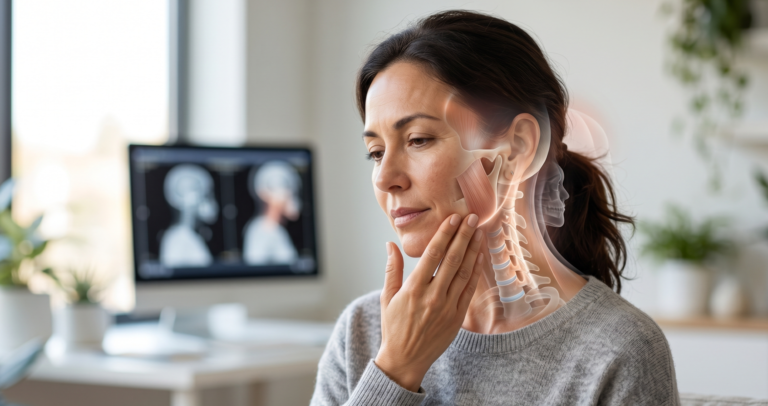
Jaw tightness and TMJ-type symptoms often overlap with neck pain and headaches especially
after injury or chronic posture strain. Digital Motion X-Ray (DMX) can evaluate cervical motion
behavior to help clarify whether motion sensitivity or instability patterns may be contributing to
persistent head/neck tension.
- Jaw symptoms can overlap with cervical posture and protective muscle guarding.
- Static imaging may miss motion-based mechanics that drive repeated flare cycles.
- Motion data can help coordinate a stabilization-first plan and reduce treatment guesswork.
Last updated: April 14, 2026
Reviewed by: DMX Miami clinical team
Many people treat jaw tightness as a purely dental problem. But a common symptom cluster
includes jaw tension, headaches, neck stiffness, and shoulder tightnessespecially after
whiplash, sports impacts, or long periods of screen time. We see this pattern in Miami, Fort
Lauderdale, Miami-Dade County, Broward County, and the Florida Keys, and in visitors from the
USA, Colombia, Chile, Argentina, Mexico, and the Caribbean.
Important: DMX does not diagnose TMJ disorders. It evaluates cervical spine motion. The goal
is to determine whether cervical mechanics are a meaningful contributor in cases where
symptoms are clearly motion- or posture-triggered.
Why jaw symptoms and neck mechanics can overlap
1) Head position changes jaw muscle tone
Forward head posture and upper neck tension can increase load on muscles that influence jaw
position and clenching behavior. Many people notice jaw tightness spikes after long phone or
laptop sessions.
2) Protective guarding after injury
After whiplash or falls, the body often adopts protective tension patterns to stabilize the head
and neck. That guarding may include jaw clenching, scalp tension, upper trap tightness, and
persistent suboccipital pressure.
3) Headaches often bridge the regions
Headaches can be a “bridge symptom” connecting jaw and neck. When headaches flare with
neck fatigue or when turning/looking down triggers both jaw tension and headache pressure,
mechanics may be part of the story.
Why static imaging can miss the functional problem
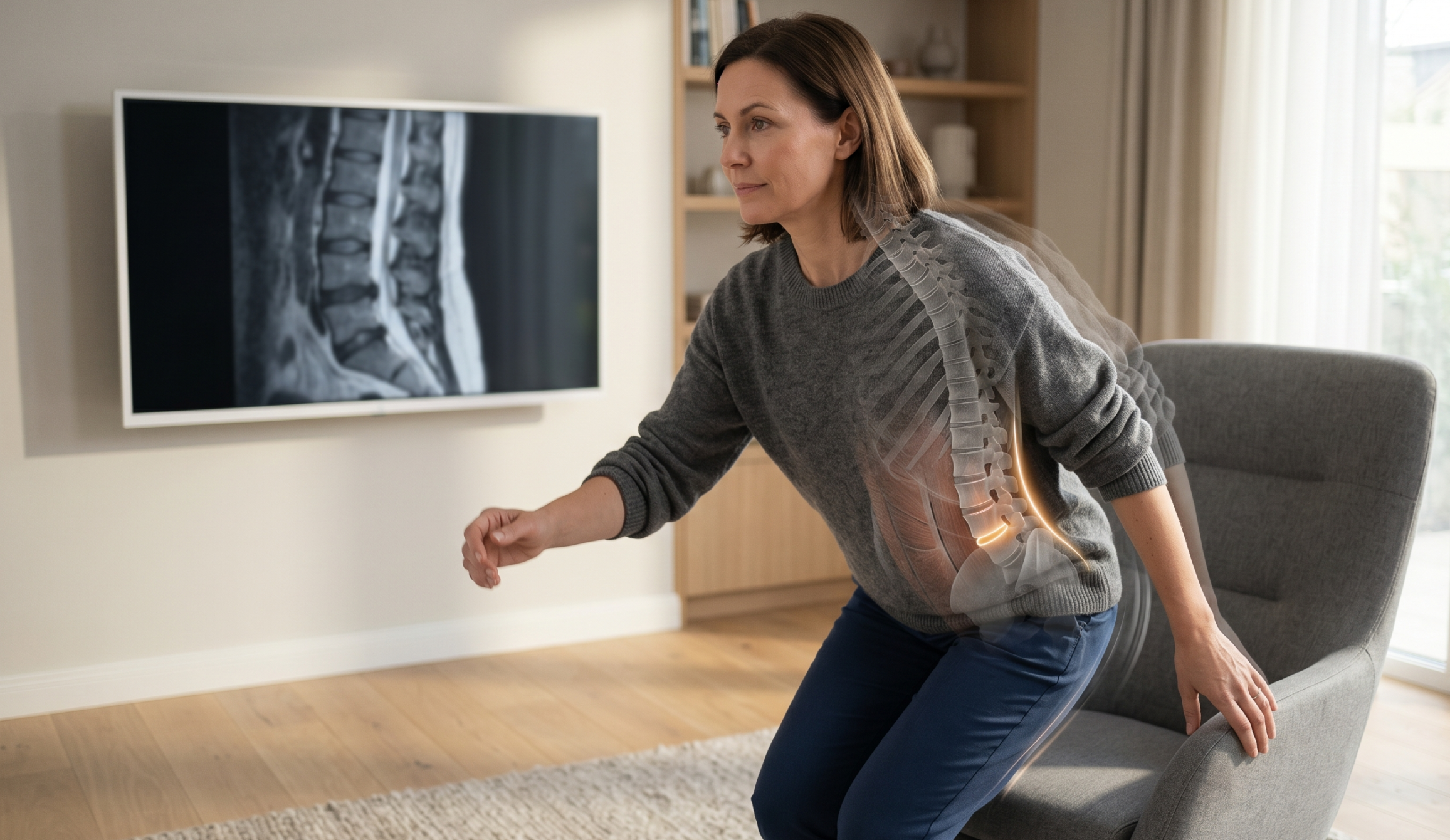
Dental imaging and cervical MRI can be useful, but they are typically static snapshots. They
may not show:
- how the cervical spine behaves during rotation, flexion, and extension.
- whether one segment hinges excessively during the arcs that trigger symptoms.
- left-right asymmetry that correlates with one-sided jaw tightness.
If symptoms are triggered by movement and load, a motion-based evaluation may add useful
information.
What DMX evaluates in these cases
DMX is fluoroscopic video X-ray used to observe segment behavior during guided cervical
motion. Providers may assess:
- Translation (sliding) between vertebrae.
- Angulation (tilting) between vertebrae.
- Asymmetry between left vs right rotation arcs.
- Hinge patterns and motion sequencing
This helps answer a practical question: does the motion behavior match the symptom triggers?
Common trigger patterns that suggest mechanics
involvement (general guidance)
- Jaw tightness worsens with prolonged desk work or phone use.
- Headaches worsen with looking down, turning, or sustained posture.
- Symptoms spike after driving (posture + rotation + fatigue).
- Neck feels “heavy” by late afternoon with jaw tension increasing.
- Stretching helps briefly but symptoms rebound quickly.
How motion findings can guide coordinated care
When motion behavior is clarified, providers can more logically coordinate:
- Stabilization-first cervical rehab and motor control.
- Posture retraining that reduces cumulative neck load.
- Exercise selection that avoids feeding extension/rotation triggers
- Communication with dental providers when bite guards or TMJ care is also needed.
Practical steps while awaiting evaluation (general
guidance)
- Build a symptom map: jaw, headache, neck (1–10) daily + triggers.
- Reduce extreme end-range neck motion if it spikes symptoms.
- Improve workstation mechanics (raise screens, reduce forward head).
- Check clenching hourly; relax jaw and shoulders.
What DMX cannot do (important expectations)
DMX is not a stand-alone diagnosis for TMJ. It does not measure bite alignment, disc position in
the jaw, or dental occlusion. It also does not replace neurological evaluation when symptoms
are severe or changing. Its role is narrower: documenting how cervical segments move during
the arcs that trigger symptoms, so providers can decide whether cervical stabilization should be
prioritized.
Questions to ask after the report
- Which cervical levels showed the most abnormal motion?
- Does the motion pattern match my triggers (phone posture, driving rotation, looking down)?
- Which motions should I temporarily limit while stabilizing (extension, rotation, combined
movements)? - What is the first rehabilitation priority for the next month?
- How will we measure improvement (less clenching, fewer headaches, better desk tolerance)?
FAQs
Can neck problems contribute to jaw tightness?
In some cases, yes especially when posture and guarding patterns link the symptoms.
Why do headaches show up with jaw and neck tension?
These regions share muscular and mechanical connections; irritation in one can amplify the
others.
What does DMX add in complex head/neck cases?
DMX evaluates real-time cervical motion and can document translation/angulation patterns that
may correlate with triggers.
Do I still need a dental evaluation?
Often yes. DMX does not replace dental/TMJ evaluation; it supports a broader mechanical
assessment when appropriate.
References
- Cleveland Clinic: TMJ disorders education.
- PubMed-indexed literature on cervical posture and temporomandibular disorder associations
Footer: DMX Miami serves patients in Miami, Fort Lauderdale, Miami-Dade, Broward, the
Florida Keys, Florida, the USA, and visitors from Colombia, Chile, Argentina, Mexico, and the
Caribbean.
Learn more: Treatment
Schedule your appointment today:Appointments
Call 305-275-7475 orbook your appointment online

Dr. Rodolfo Alfonso, D.C.
Dr. Mark N. Berry, D.C.
Sunset Chiropractic and Wellness
8585 Sunset Dr. STE 102
Miami, Florida 33143