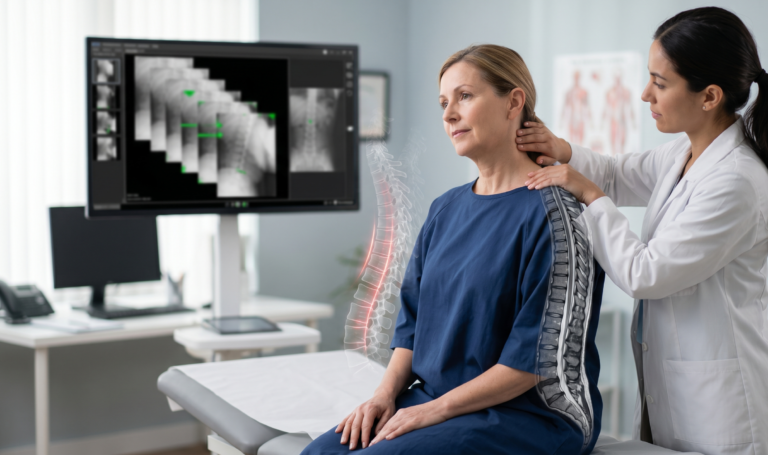
MRI is excellent for discs, nerves, and structural problems usually in a static position. DMX evaluates spinal motion in real time, which can help identify instability patterns (translation/angulation) that may not appear on still images. Many complex cases benefit from both.
- MRI = structure; DMX = function in motion.
- Instability is often a motion problem, not a “picture” problem.
- The best imaging depends on your symptom triggers and exam findings.
Last updated: April 14, 2026
Reviewed by: DMX Miami clinical team
Patients often ask:
- “Do I need DMX if I already have an MRI?”
- “Which one is better?”
- “Why do my symptoms not match the report?”
At DMX Miami, we serve patients from Miami, Fort Lauderdale, Miami-Dade, Broward, the Florida Keys, and visitors from the USA, Colombia, Chile, Argentina, Mexico, and the Caribbean. Many come after having MRI but still experiencing motion-triggered symptoms.
What MRI Does Best
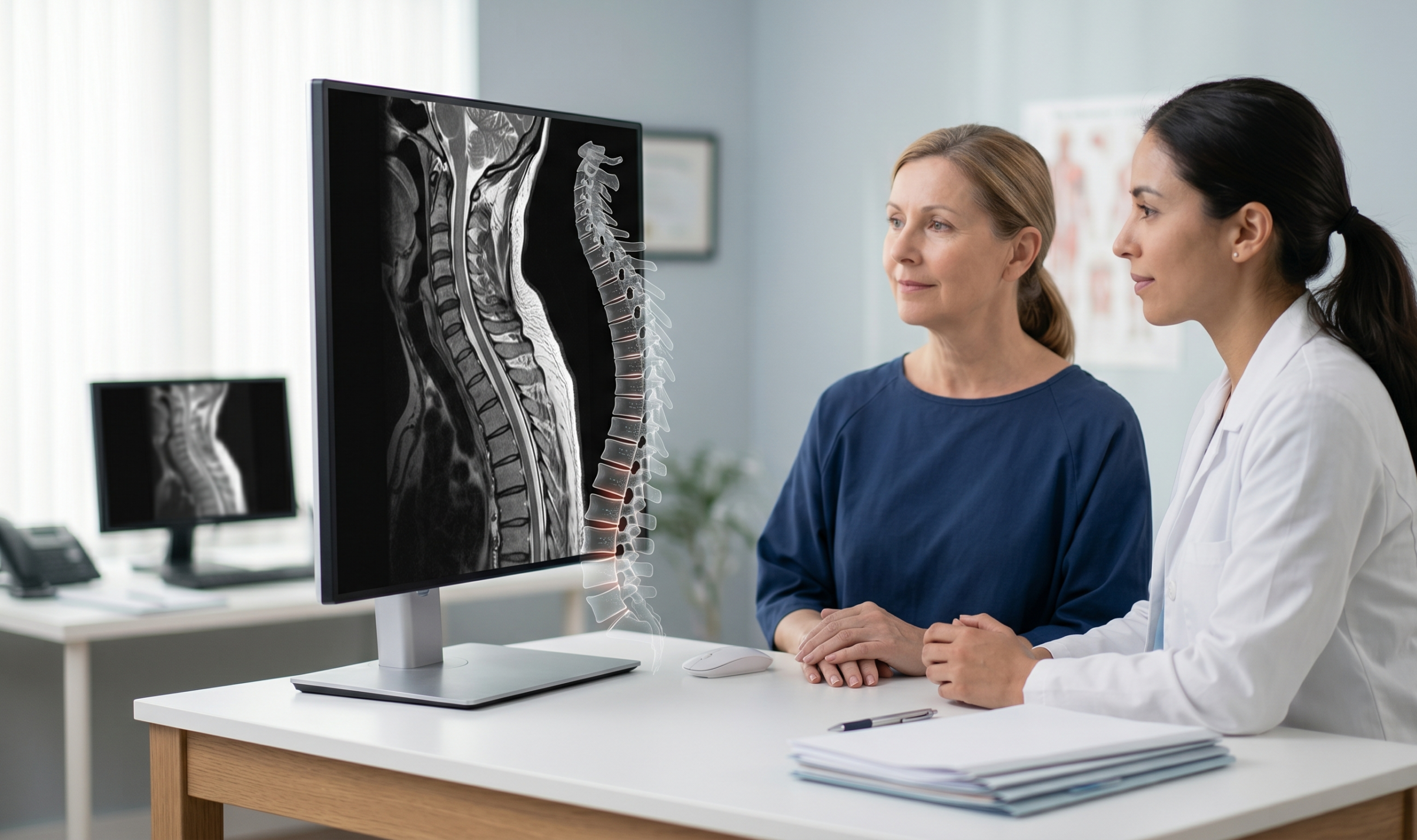
MRI is excellent for:
- disc herniations.
- spinal cord/nerve root issues.
- inflammation and soft-tissue evaluation.
- many serious structural problems.
MRI is typically done in a still position, usually lying down.
What DMX Does Best
DMX is a fluoroscopic video X-ray that evaluates how the spine moves through guided motion. It helps assess:
- Translation (sliding).
- Angulation (tilting).
- asymmetry and hinge segments.
- motion patterns linked to symptoms.
Why Instability Can Be Missed on MRI
If your symptoms show up during:
- turning the head.
- looking up/down.
- bending and returning upright.
- standing transitions.
…then the issue may not appear on a neutral static MRI.
When People Often Need Both
You and your provider may consider both when:
- there is trauma history (whiplash/fall).
- symptoms are movement-triggered.
- static imaging doesn’t match severity.
- clinical exam suggests instability or motion dysfunction.
How to Decide: The Best Question to Ask
Ask your provider:
“Are my symptoms and exam findings suggesting a motion problem or a structural problem—or both?”
FAQs
Is DMX better than MRI?
They answer different questions. MRI shows structure; DMX shows motion and stability behavior.
Can instability exist with a normal MRI?
Yes. Instability often appears only during movement.
Does DMX replace MRI?
No. DMX complements MRI/CT when motion behavior is clinically relevant.
How do I know if I need DMX?
If symptoms are strongly motion-triggered and static imaging doesn’t match, your provider may consider DMX.
References
- NCBI/PubMed: Spine biomechanics and motion-based instability concepts.
- Cleveland Clinic: Cervical radiculopathy / neck evaluation patient education.
Learn more: Treatment
Schedule your appointment today:Appointments
Call 305-275-7475 orbook your appointment online

Dr. Rodolfo Alfonso, D.C.
Dr. Mark N. Berry, D.C.
Sunset Chiropractic and Wellness
8585 Sunset Dr. STE 102
Miami, Florida 33143