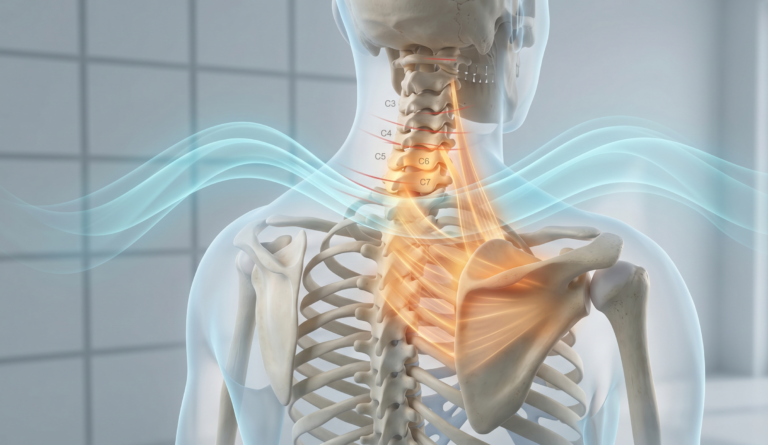
Pain between the shoulder blades after whiplash is often treated as a “mid-back” problem, but cervical mechanics can refer pain into the upper back. DMX evaluates cervical motion in real time and can identify instability patterns that help explain persistent shoulder blade pain.
- Shoulder blade pain can be referred from cervical segments and muscle guarding.
- Static imaging may miss motion-based instability that shows up during movement arcs.
- DMX findings can guide stabilization-first rehab and safer manual care.
Last updated: April 14, 2026
Reviewed by: DMX Miami clinical team
Many patients describe pain that feels like it lives between the shoulder blades, especially after a rear-end accident or fall:
- burning or aching along the inner shoulder blade..
- tightness that worsens with desk work.
- pain that spikes during driving or head turning.
- headaches plus upper back tension.
At DMX Miami, we see this in patients from Miami, Fort Lauderdale, Miami-Dade County, Broward County, the Florida Keys, Florida, and visitors from the USA, Colombia, Chile, Argentina, Mexico, and the Caribbean.
Why Neck Mechanics Can Cause Shoulder Blade Pain
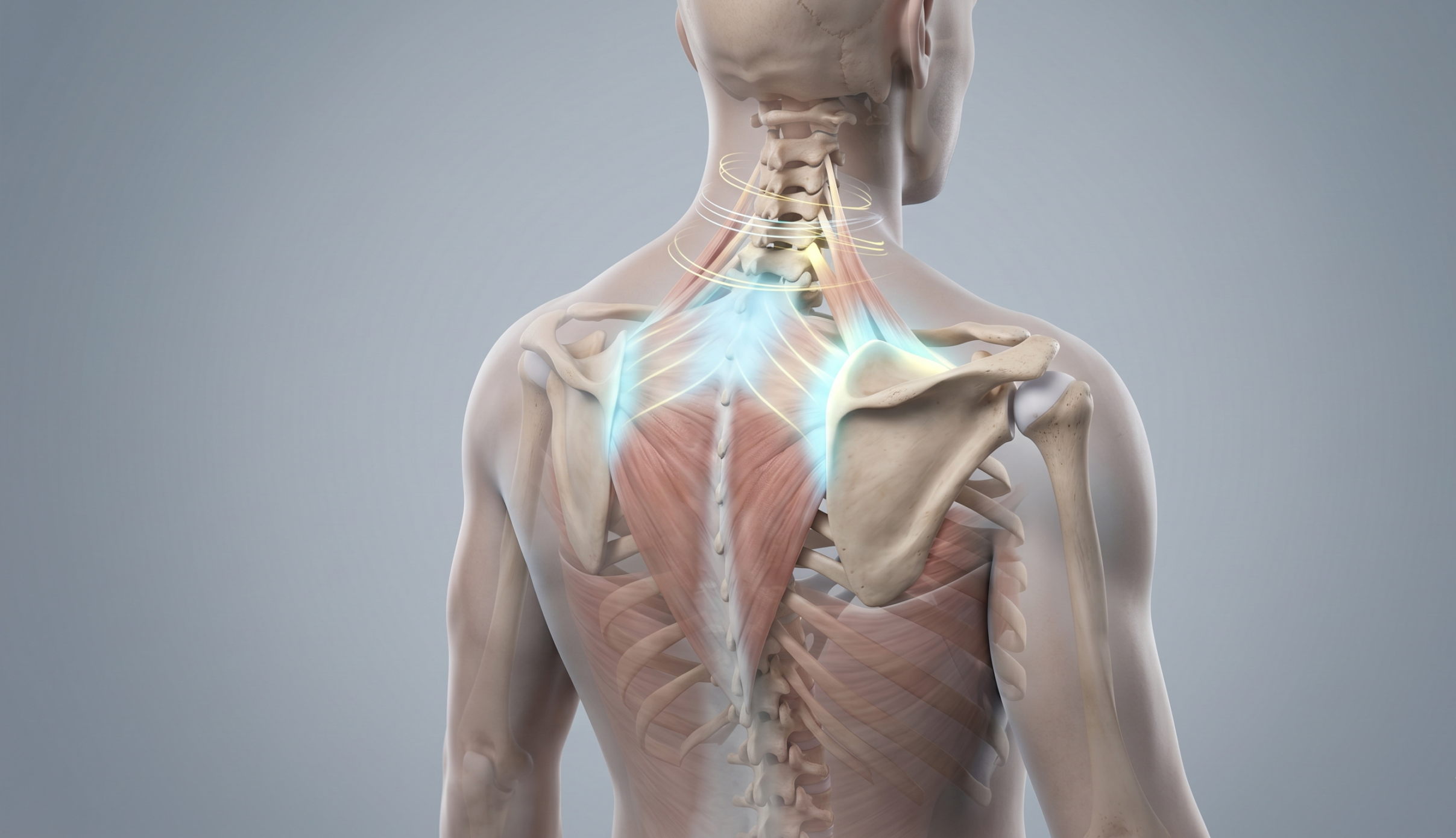
Cervical segments can refer pain downward
Upper cervical and mid-cervical irritation can cause protective muscle guarding that is felt in the upper trapezius and shoulder blade region.
Muscle guarding can become the main pain generator
After whiplash, muscles often tighten to stabilize the spine. That constant guarding can create persistent shoulder blade burning and fatigue.
The trigger is often motion-dependent
If pain worsens with turning, looking up/down, or sustained posture, mechanics are likely involved.
Why MRI Might Not Explain It
MRI is a static snapshot. If the issue is abnormal motion control or instability during movement arcs, the MRI may look mild while symptoms are very real.
How Digital Motion X-Ray Helps
DMX is a fluoroscopic video X-ray that evaluates cervical movement during guided motion. It allows providers to assess:
- Translation (abnormal sliding).
- Angulation (abnormal tilting).
- asymmetry and hinge segments that may correlate with your triggers.
How DMX Can Change the Plan
If abnormal motion is identified, your provider may:
- prioritize stabilization and motor control.
- reduce repeated end-range stress.
- modify manual therapy techniques to protect unstable levels.
- tailor posture and workstation strategy based on the vulnerable segments.
FAQs
Can neck issues cause pain between the shoulder blades?
Yes. Cervical irritation and guarding can refer pain into the shoulder blade region.
Why does driving worsen shoulder blade pain?
Driving combines posture load with repeated head turns, stressing motion-sensitive mechanics.
What does DMX add that MRI doesn’t?
DMX evaluates real-time motion behavior (translation/angulation) during movement arcs.
Does DMX replace thoracic imaging?
No. DMX complements other imaging when motion-based cervical contribution is suspected.
References
- NCBI/PubMed: Whiplash-associated disorders and cervical mechanics concepts.
- Cleveland Clinic: Neck pain and cervicogenic referral education.
Learn more: Treatment
Schedule your appointment today:Appointments
Call 305-275-7475 orbook your appointment online

Dr. Rodolfo Alfonso, D.C.
Dr. Mark N. Berry, D.C.
Sunset Chiropractic and Wellness
8585 Sunset Dr. STE 102
Miami, Florida 33143